Microsoft’s Dilemma: Will Halo, Gears, and Forza Leave PlayStation?
▼ Summary
– Xbox CEO Phil Spencer initially said only four games would go to PlayStation, but later Indiana Jones was also ported, signaling a shift away from exclusivity.
– A poll found 12% of readers think Xbox should have no exclusives, but the majority want some form of exclusive content, though sales data hasn’t supported that sentiment.
– Console gaming is stagnating, with younger demographics (18–24) accounting for only 3% of hardware purchases, down from 10% in 2022.
– Xbox leadership, including CEO Asha Sharma, has hinted at re-evaluating exclusivity, potentially returning to limited or timed exclusives like Gears of War: E-Day.
– Putting Xbox icons like Halo and Gears on PlayStation may provide short-term revenue but risks long-term brand damage and further decline in Xbox hardware sales.
The biggest question hanging over Xbox right now is whether the platform will ever reclaim true exclusive games. It’s a debate that has dominated conversations among fans and analysts alike, and for good reason.
A few years ago, Xbox announced in a dry, business-focused presentation that it would bring four of its exclusive titles to PlayStation. CEO Phil Spencer explicitly stated that Indiana Jones was not among them,only for the game to later arrive on Sony’s console. That pivot set a precedent that has only accelerated. When Forza Horizon exploded in sales on PlayStation, generating enormous revenue for both Microsoft and Sony, the writing became clear: Xbox exclusives were becoming a thing of the past. I predicted two years ago, under the banner of “Project Latitude,” that any future exclusivity would be incidental,limited by budget, dev kit access, or pipeline constraints. Essentially, every Xbox game would eventually land on PlayStation, with some also hitting Nintendo Switch 2.
Yet, new CEO Asha Sharma has signaled a potential reversal. She recently stated that “the plan is the plan until it’s not the plan,” and has repeatedly confirmed that exclusive games for Xbox are being re-evaluated. This has sparked renewed hope,and confusion,among the community.
The core tension is simple: Xbox owners overwhelmingly want exclusive content. A recent poll on Windows Central found that only 12% of readers believe Xbox shouldn’t have any exclusives at all. Most want at least timed exclusivity, and many demand full exclusivity. But Microsoft’s data tells a different story. Former CEO Phil Spencer admitted that even a game as hyped as Starfield wouldn’t have moved the needle on console sales. That’s because the console gaming market is stagnating. Analytics from Circana and Ampere show that younger generations,Gen Z and Gen Alpha,are simply not buying consoles. Those who don’t game on consoles in their youth rarely adopt them later. In fact, households earning over $100,000 now account for 43% of U. S. hardware purchases, up from 36% a few years ago, while 18-to-24-year-olds represent just 3% of those sales, down from 10% in 2022.
Console gaming has become the domain of older players,the “uncs,” as the internet might say. Kids today grew up on iPads and Roblox, their expectations shaped by free-to-play ecosystems and addictive social media algorithms. Combined console sales across the big three are trailing the previous generation due to rising costs, the dominance of free-to-play games, and the shift to dual-monitor PC gaming. In this shrinking market, how can Xbox,or any platform holder,keep up with inflation? Both Xbox and PlayStation are exploring new revenue streams. PlayStation even put Helldivers 2 on Xbox last year, proving that this behavior isn’t exclusive to Microsoft.
Despite these pressures, Sharma and Chief Content Officer Matt Booty have set strong expectations. I doubt they would tease a return to exclusivity without a plan. My guess is that we’ll see a limited form of exclusivity return, possibly timed. Gears of War: Reloaded barely made a splash on PlayStation last year, raising the question: is the revenue worth the brand damage? Microsoft is a company driven by telemetry,I call it “spreadsheetification.” If it can’t be measured in a spreadsheet, decision-making stalls. This corporate inertia is why smaller, nimble firms like Discord can disrupt entire markets. But the backlash to Xbox’s strategy has been so loud that it can no longer be ignored. We’ve already seen a reversal on the 50% price hike for Xbox Game Pass Ultimate. When was the last time a subscription service got cheaper?
Rumors suggest that Gears of War: E-Day could be a true Xbox exclusive, at least for a time. But what about Halo and Forza? Forza Horizon will continue to sell millions on PlayStation, but will Gears and Halo replicate that success? These aren’t Minecraft or Call of Duty,titles that have PlayStation’s install base baked into their business models. The ship has sailed for those franchises. But what if Elder Scrolls 6 or Fallout 5 were Xbox console-exclusive? A steady cadence of high-quality exclusives could absolutely sell hardware, especially for the rumored Xbox Helix, which may be disproportionately expensive.
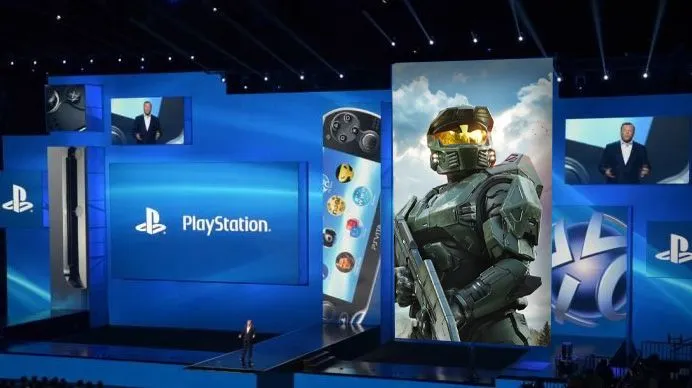
The brand damage of putting icons like Master Chief and Marcus Fenix on PlayStation feels immeasurable. Yes, they’ll sell copies, but is it worth making your loyal users feel abandoned? Gears and Halo never had a strong audience on PlayStation until former CFO Amy Hood pushed Xbox to chase an aggressive 30% profit target. The counterargument is that if Xbox can’t attract Gen Z and Alpha users due to Roblox and other platforms, it needs to find money elsewhere,on PlayStation. But that logic is reductive. If the entire console market is shrinking, putting games on PlayStation only accelerates the problem. Kids don’t want to play Halo or Gears, and their parents aren’t buying consoles for them.
Microsoft didn’t even give cloud gaming a real chance before chasing PlayStation’s audience. It has done little to market its own platform or consoles. Meeting people where they are is fine, but reinforcing PlayStation’s position in a stagnant market doesn’t help. Microsoft should be fighting for remaining console users with one hand and exploring what’s next for younger generations with the other. Instead, it has painted itself into a corner. Its studios may now rely on PlayStation’s install base for investment, even if sales are anaemic.
So, will Xbox return to console-exclusive games? Halo: Campaign Evolved is already announced for PlayStation, so that ship has sailed. But perhaps the next Halo could be exclusive. I go back and forth, but the constant talk of “re-evaluating” makes me think some form of exclusivity will return,likely timed. Gears: E-Day could be a timed Xbox console-exclusive, but the damage is already done with Halo.
Putting games on PlayStation does allow studios to be more ambitious. Fable looks truly AAA, but is that only because Playground Games can offset risk with projected sales on PlayStation? I believe that cross-platform releases help raise the quality bar. But at the same time, they are devastating Xbox as a hardware platform. Sales are in freefall. Why buy an Xbox in 2026 if none of its content is exclusive? That’s a serious question for the average consumer.
Console enthusiasts might buy both devices if there’s enough content. I don’t own a PlayStation, but I’m exactly their target market,I’m drawn by their exclusive content. Unless I’m playing with friends, I wouldn’t buy a console without exclusives. I hope Microsoft realizes that attracting Gen Z and Alpha is a long-term problem. If it alienates current users, there won’t be a platform left to solve it. Competitors won’t help; they’ll happily cannibalize your platform.
Maybe Xbox has a “secret weapon” in its upcoming Helix hardware that could leapfrog the need for exclusives. That’s a big if, and it seems unlikely. I can’t see how putting Halo, Gears, and other icons on PlayStation improves the business long-term. Short-term gains for long-term pain seems to be Microsoft’s modus operandi.
What do you think? Share your thoughts in the poll above and in the comments below. Join us on Reddit at r/WindowsCentral for more discussion.
(Source: Windows Central)