Meet the 19-meter Cretaceous kraken that hunted with mosasaurs
▼ Summary
– A new study in *Science* argues that giant, finned octopuses up to 19 meters long were apex predators in the late Cretaceous oceans, challenging the previous consensus that large vertebrates held that role.
– These ancient octopuses had powerful, hardened beaks and likely high intelligence, and they lacked any bones.
– Previously, Cretaceous marine ecosystems were understood as being dominated by large vertebrate predators like mosasaurs and plesiosaurs.
– Invertebrates were generally seen as prey that evolved protective structures like hard shells.
– Octopuses rarely fossilize, making them difficult to study, but this research changes the understanding of their role in ancient food webs.
Around 80 million years ago, the late Cretaceous seas were dominated by 17-meter mosasaurs, long-necked plesiosaurs, and enormous predatory sharks. For years, paleontologists largely agreed that this was the era of vertebrates,anything without a backbone was simply prey.
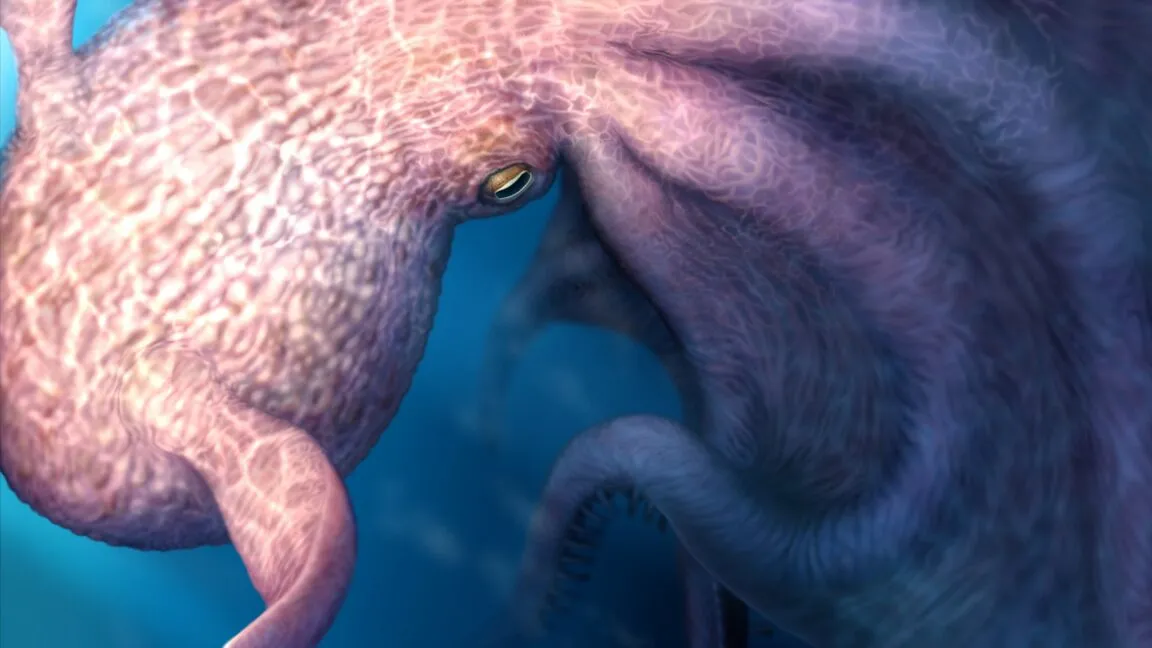
But a new study published in Science challenges that assumption, proposing that another apex predator ruled the depths,one with not a single bone in its body. Researchers have identified fossilized remains of ancient, finned octopuses that may have reached lengths of up to 19 meters. These colossal invertebrates were equipped with powerful, hardened beaks and likely possessed high intelligence, making them formidable hunters.
The discovery flips the traditional view of Cretaceous food webs. “Before this study, Cretaceous marine ecosystems were generally understood as worlds in which large vertebrate predators occupied the top of the food web,” said Yasuhiro Iba, a paleontologist at Hokkaido University and co-author of the paper. Invertebrates, he explained, were often seen as passive prey that evolved hard shells and other defenses to survive. Octopuses, in particular, have been hard to study because their soft bodies rarely fossilize. “Our study changes that picture,” Iba added.
The team used a technique akin to reverse 3D printing to reconstruct the octopus from its preserved beak and other remains. The result paints a startling new image of the Cretaceous ocean: a world where giant, intelligent octopuses swam alongside the largest vertebrate predators, competing for the same prey.
(Source: Ars Technica)