Rand Fishkin: AI Didn’t Start Zero-Click Search
▼ Summary
– Rand Fishkin entered SEO out of necessity after his family’s web business could no longer afford to hire an agency.
– He recalls early SEO as a chaotic era where risky tactics like buying links were common and openly shared on forums.
– Fishkin argues a major shift for publishers began around 2011 with “zero-click search,” long before AI, reducing website traffic.
– He believes major publishers missed a key opportunity to collectively push back against Google’s use of their content years ago.
– Fishkin states a common AI mistake is treating its answers as reliable, when they can vary widely with each query.
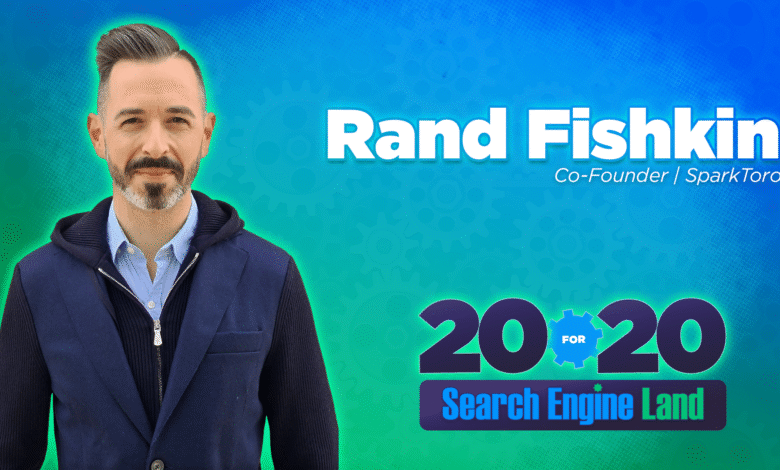
Rand Fishkin entered the world of search engine optimization not from a place of foresight, but from necessity. In the early 2000s, running a small web business with his mother in Seattle, they could no longer afford their SEO contractor. That financial pressure forced him to learn the craft himself, launching a journey that would make him one of the most prominent and critical voices in the industry over the next two decades. His perspective offers a unique lens on how search has transformed and where it might be headed.
The early SEO landscape was a frontier of organized chaos. Before social media hubs existed, forums like WebmasterWorld and SearchEngineWatch served as the central gathering places. Tactics were shared openly, with many embracing risky but effective strategies such as buying links. Fishkin himself participated in these practices until a public call-out by Google’s Matt Cutts prompted a major shift in his approach. He spent years committed to so-called white hat SEO, diligently following Google’s official guidelines. Reflecting now, he questions whether that adherence went too far, suggesting the company’s subsequent actions have eroded trust in those very rules. Beyond the tactics, that era was marked by memorable industry culture, from lavish conference parties to staged retirements of search mascots. For Fishkin, however, the true legacy was the people and the lasting professional relationships forged.
A common narrative pins a radical transformation in search on the recent rise of generative AI. Fishkin argues the pivotal shift began much earlier, around 2011, with the emergence of zero-click search. This is when Google started answering queries directly on its results page through features like weather boxes and calculators, reducing the need for users to click through to websites. This trend accelerated dramatically. By 2016-2017, nearly half of all searches ended without a click. That figure grew to more than half by 2018, and today stands at over two-thirds. The central point is clear: the diversion of traffic away from publishers is not an AI-originated phenomenon but a strategic direction Google has pursued for well over a decade.
This long-building trend highlights what Fishkin sees as a critical missed opportunity for publishers. The time for collective action, he asserts, was 15 or 20 years ago. Major media companies could have banded together to negotiate terms, perhaps demanding payment for content or restricting how it was crawled and used. Instead, they largely allowed Google unrestricted access. Concurrently, Google expanded its influence through aggressive lobbying and policy shaping. That window has closed, shifting the imperative from resistance to adaptation. The path forward involves building subscription businesses, monetizing audience attention directly, and learning to operate effectively within dominant platform ecosystems. Publications like The New York Times exemplify this necessary evolution beyond reliance on organic search traffic.
Has Google’s core product become worse for the average user? Fishkin doesn’t think so, noting that if alternatives like Bing offered a superior experience, users would migrate. The more significant change, in his view, is that Google has become exponentially more challenging for publishers and content creators. This was a gradual evolution. As the company grew, went public, and aligned with investor expectations, its priorities inevitably shifted toward sustaining growth and revenue. Fishkin summarizes this transformation succinctly: they became the people they spent time with.
When discussing modern AI tools, Fishkin identifies a fundamental and potentially dangerous mistake: treating AI answers like traditional search results. People often assume consistency and reliability, but large language models are inherently probabilistic. Asking the same question multiple times can yield wildly different answers. His practical advice is to never rely on a single response, especially for critical decisions in areas like health or finance. Instead, query multiple times and look for consistent patterns across answers; repetition increases the likelihood of accuracy.
What does he miss most about the early web? Not any particular tactic, but the distribution of opportunity. The landscape for clicks and traffic was far flatter, giving independent sites and smaller creators a realistic chance to build an audience and succeed. Today, that ecosystem is far more concentrated and challenging to penetrate.
Looking ahead, Fishkin envisions a future that may resemble a more centralized past. He anticipates a handful of powerful platforms, including but not limited to Google, controlling the primary flows of information and attention. Within those walled gardens, individual creators will still produce the bulk of the content. Despite this consolidation, he retains a hope that the open web can find new ways to evolve and foster innovation.
(Source: Search Engine Land)