Hermeus Secures $350M for Hypersonic Fighter Development
▼ Summary
– Hermeus raised $350 million in a funding round, with $200 million in equity led by Khosla Ventures and $150 million in debt, reaching a $1 billion valuation.
– The startup pivoted from developing its own engine to modifying Pratt & Whitney’s F100 engine, accelerating its path to building a hypersonic aircraft.
– Hermeus is pursuing rapid prototyping, having already flown a large-scale demonstrator and planning supersonic and subsequent aircraft iterations.
– The company cites cultivating specialized talent as its hardest challenge, as few organizations build new full-scale aircraft annually.
– The funding will support staff growth and manufacturing expansion, with the debt portion helping the company finance operations without excessive dilution.
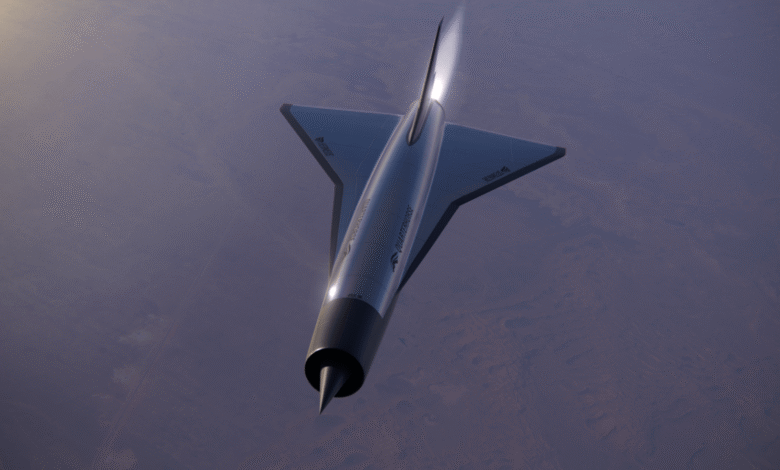
A Los Angeles-based defense startup has secured a significant $350 million investment to advance its program for a hypersonic unmanned aircraft. This latest funding round, which values the company at $1 billion, underscores the intense investor interest in next-generation defense technologies. The capital infusion will accelerate the development of what the firm claims will be the world’s fastest drone.
The financing package comprises $200 million in equity, led by Khosla Ventures, with participation from existing backers like Canaan Partners, Founders Fund, In-Q-Tel, and RTX Ventures. New investors include the venture fund of Cox Enterprises and Destiny Tech100. The remaining $150 million is structured as debt, a strategic move highlighted by co-founder and CEO AJ Piplica. He explained that this non-dilutive financing is crucial for a hardware-intensive company expanding its manufacturing footprint, allowing it to fund major expenditures while maintaining greater control for its shareholders.
This substantial raise occurs within a booming sector. Last year, global venture capital investment in defense technology surpassed $9 billion across 265 deals, with corporate investors contributing an additional $2 billion. While the favorable market climate helps, company leadership points to a pivotal strategic shift as a key driver behind their fundraising success. Several years ago, Hermeus pivoted from developing its own engine from scratch to partnering with RTX subsidiary Pratt & Whitney. The decision to modify Pratt & Whitney’s proven F100 engine provided a reliable propulsion system and dramatically accelerated the development timeline.
According to President Zach Shore, this partnership created a virtuous cycle. It not only speeds progress toward the ultimate goal of Mach 5 flight but also strengthens the company’s business model by addressing immediate demand from the U. S. Department of Defense. This approach allows the company to pursue multiple, overlapping objectives that reinforce technology maturation, customer relationships, and commercial viability simultaneously.
The company’s development philosophy emphasizes rapid prototyping, a methodology rarely seen in traditional aerospace. Last month, Hermeus successfully flew a full-scale, F-16-sized technology demonstrator. The next iteration aims to achieve supersonic speeds, with a third aircraft already in development. Piplica cites SpaceX as an inspiration for this build-test-learn-repeat cycle, acknowledging that failure is an expected part of the process. The real challenge, he notes, is intelligently managing risk and capital allocation over time.
Cultivating specialized talent represents perhaps the greatest hurdle. Piplica observed that the aerospace industry no longer produces new, clean-sheet aircraft on an annual basis, meaning companies must develop this rare expertise internally. The new funding will support continued team growth beyond the current nearly 300 employees. While Hermeus has now completed two successful test flights, including a smaller demonstrator last year, leadership is prepared for setbacks as an inherent cost of innovation. The strategy of building multiple aircraft prototypes is designed to foster a culture of calculated risk-taking and avoid the protracted development cycles that have historically plagued aviation.
(Source: TechCrunch)