NASA’s Moon Rocket Ready, But Lunar Landers Face Delays

▼ Summary
– Both HLS providers found that using the near-rectilinear halo orbit (NRHO) requires excessive fuel for lunar surface access and return, so they are seeking alternative orbits.
– NASA is balancing the demands on its Orion spacecraft with the landers’ fuel needs by considering lower, non-NRHO orbits that benefit the providers.
– To address timeline concerns for a 2028 landing, NASA is reducing technical requirements to make the lander development less demanding.
– A key method for building confidence is conducting an earlier Earth-orbit demo to test a simpler lander version in a more benign environment.
– Requirement reductions also include simplifying communication systems, crew excursion limits, and operational designs to decrease mass and complexity.
While NASA’s Space Launch System rocket is ready, the human-rated lunar landers for the Artemis program face significant development hurdles. The agency is actively working to streamline requirements for its commercial partners, SpaceX and Blue Origin, to improve the chances of achieving a crewed landing by the end of this decade. A primary focus is moving away from the planned near-rectilinear halo orbit (NRHO), a gateway orbit that demands substantial fuel from the landers for descent and ascent. Both companies have proposed alternative orbital approaches that would reduce propellant needs, though this shifts more operational demands onto the Orion spacecraft. NASA is seeking a balanced solution that eases the burden on the lander providers while maintaining mission safety and objectives.
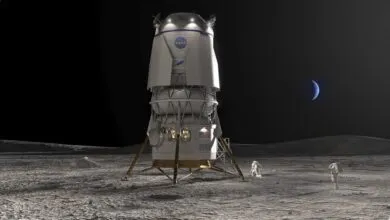
The current timeline, which targets a 2027 orbital demonstration and a 2028 lunar landing, appears ambitious given public progress. SpaceX’s Starship vehicle, a key element of the plan, has experienced developmental challenges, with its next test flight now projected for late spring. Similarly, Blue Origin’s Blue Moon lander remains in early testing phases at its Houston facility. When questioned about the realism of these schedules, NASA’s Lori Glaze acknowledged the challenges but pointed to strategy adjustments designed to build confidence. Conducting an initial Earth-orbit demo mission is a critical step, allowing for testing in a “more benign environment” closer to home before committing to a full lunar mission. This approach is intended to validate systems and reduce overall risk.
Relaxing requirements extends beyond orbital mechanics. NASA is scrutinizing a range of specifications to simplify the landers’ design and operations. This includes evaluating communication system needs between astronauts and the lander, as well as the scope of scientific and operational gear that must be carried. Factors like the planned distance crews will travel from their landing site directly impact the mass and complexity of support systems. By examining these operational details, the agency aims to reduce the overall mass that must be accommodated and streamline the integration of various components. The goal is to identify every possible simplification that can help the providers accelerate their development timelines and deliver a functional system for a 2028 landing attempt.
(Source: Ars Technica)