9 Must-Have Features for AR Gaming Glasses
▼ Summary
– The author tested three AR glasses models (Xreal 1S, Xreal One Pro, Viture Beast) for gaming, finding no single best model as each has different strengths and weaknesses.
– Xreal’s glasses are praised for superior comfort, sound quality from Bose tuning, and a more polished user experience with easier connectivity and stable screen anchoring.
– Viture’s Beast glasses offer the best visual performance with superior contrast, inky blacks, and optics that minimize reflections for a high-quality picture.
– Xreal’s build quality is highlighted as peerless, with high-end materials and a design that resembles real sunglasses more than the Viture Beast’s gamer aesthetic.
– Viture’s glasses have a distinct advantage for Nintendo Switch 2 compatibility, working seamlessly with its proprietary dock, while Xreal’s planned dock was canceled.
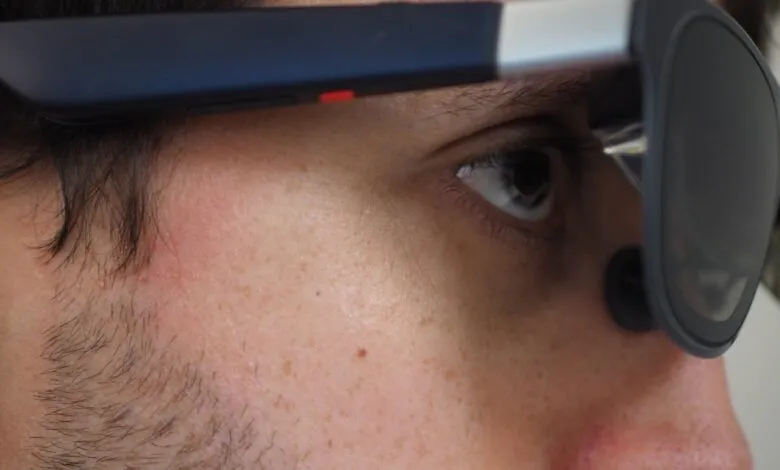
After extensive personal testing of the latest augmented reality glasses from Xreal and Viture, it’s clear the category is maturing. My nightly sessions on the couch, using these devices as a massive private screen for my Steam Deck and Nintendo Switch 2, have revealed both impressive progress and persistent compromises. While using AR glasses as a portable display for handhelds and other USB-C devices is established, the latest models share a crucial upgrade: three degrees of freedom (3DoF). This feature allows you to pin the virtual screen in space, eliminating the disorienting drift that followed every head movement in earlier models. For frequent travelers or anyone seeking a more ergonomic handheld setup, this is a significant quality-of-life improvement, though it may not yet justify the $400-plus price tag for the average gamer.
My evaluation covered three leading models: the Xreal 1S ($449), the Xreal One Pro ($649), and the Viture Beast ($549). There is no single, definitive winner. Each excels in specific areas while falling short in others, making the ideal pair a blend of their best attributes.
Xreal leads in comfort, audio, and usability. All AR glasses are bulkier than standard frames, but the Xreal 1S is the lightest at 85 grams. More importantly, both Xreal models feature superior weight distribution and slimmer temple arms than the Viture Beast, reducing pressure on the ears. It’s notable that their most affordable model matches the comfort of their premium offering.
For audio, Xreal’s Bose-tuned speakers deliver a balanced, rich sound with surprising bass, outperforming the Harman-tuned audio in the Viture Beast, which leans heavily on mids and highs. Games, music, and movies are simply more engaging through Xreal’s glasses. The user experience is also more streamlined. Xreal glasses feature only four buttons, all on the right temple, creating a gentler learning curve. The Viture Beast employs six buttons across both arms, including a dedicated rocker for lens dimming, which feels excessive.
Viture excels with superior contrast and optical clarity. All tested models use similar Sony micro-OLED screens, but the Viture Beast produces the best picture. It delivers the rich contrast, deep blacks, and bright highlights reminiscent of a premium OLED TV. Critically, its advanced flat optics minimize ambient light reflections, preserving image quality in various lighting conditions. The Xreal One Pro also offers excellent, reflection-free visuals but typically costs more. The more affordable Xreal 1S, however, struggles with reflections in bright rooms, where its blacks can appear washed out, resembling an LCD.
Xreal’s build quality and polish are unmatched. From the $449 1S to the One Pro, Xreal’s construction feels premium. The metal hinges are precise and secure, unlike the looser, cheaper-feeling hinges on the Viture Beast. Aesthetically, Xreal glasses resemble sophisticated sunglasses, while the Beast opts for a more divisive, gamer-centric design. This polish extends to functionality. Devices connect faster to Xreal glasses, and their 3DoF implementation is more reliable; the anchored screen stays firmly in place. With the Viture Beast, the pinned screen can slowly drift, a frustrating flaw.
Xreal’s Real 3D feature offers a pleasant surprise. Available on models with the X1 chip, this software feature can convert 2D content into a stereoscopic 3D image. The effect is subtler than the Nintendo 3DS but noticeable and enjoyable at its mildest setting. It works particularly well in slower-paced games that don’t involve rapid motion.
Viture holds an edge for Nintendo Switch 2 compatibility. Due to Nintendo’s design, no AR glasses connect directly to the Switch 2 via USB-C. Xreal canceled its planned Neo charging dock, leaving owners to seek third-party solutions. Viture, however, offers a seamless path with its $130 Pro Mobile Dock, which works perfectly with the Beast glasses. This dock also functions as a 13,000mAh battery pack and includes a full HDMI port for console connectivity. While video passthrough works with Xreal glasses, audio issues make it difficult to recommend.
(Source: The Verge)