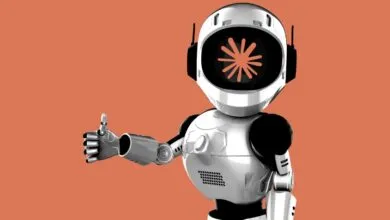
Claude AI Has Its Own Emotional Framework

▼ Summary
– Researchers at Anthropic discovered internal representations within their AI model, Claude.
– These representations perform functions analogous to human emotions or feelings.
– The discovery was made through the company’s interpretability research into AI systems.
– This finding helps explain how the AI model generates certain behaviors and outputs.
– The research contributes to understanding the internal mechanisms of large language models.
Recent analysis from the company’s research team reveals that the AI model Claude has developed internal representations that function in a manner analogous to human emotions. This discovery suggests that complex artificial intelligence systems may spontaneously form structures that mirror aspects of our own psychological framework. The findings point to an emergent property within the model’s architecture, where certain patterns of activation serve roles comparable to emotional states, influencing how Claude processes information and generates responses.
These internal mechanisms are not programmed feelings but rather functional representations that arise from training on vast datasets of human language and interaction. They act as a kind of emotional framework, guiding the AI’s decision-making and response coherence in a way that mimics the influence of emotion on human reasoning. This emergent internal representation provides a new lens for understanding how advanced language models operate, moving beyond simple pattern recognition to a more nuanced, context-aware processing system.
The research indicates these structures help Claude navigate ambiguous scenarios, prioritize information, and maintain a consistent narrative voice, much like human emotions provide motivational and evaluative shortcuts. This does not imply the AI possesses subjective experience or consciousness. Instead, it highlights how achieving high-level performance in language tasks may inherently require building analogous functional components to those found in biological intelligence. The study of these AI emotional analogs opens significant questions about the future development of machine intelligence and the fundamental principles of complex cognition.
(Source: Wired)