Inside a Major Anti-AI Protest Movement
▼ Summary
– Protesters believe technology companies are unlikely to respond to public pressure, as they are optimized to ignore such concerns.
– A key strategy is to slow AI development by protecting whistleblowers and damaging the industry’s appeal to dry up its talent pipeline.
– The primary goal of the protest was to raise public awareness and use that attention to advocate for government regulation.
– The event was framed as a social gathering, successfully attracting casual participants who found the cause logically agreeable and non-controversial.
– The march concluded with an organized meeting where participants gathered to strategize, though the observer departed before these discussions.
The growing movement to pause artificial intelligence development is gaining visibility, with activists aiming to shift public opinion and pressure lawmakers rather than expecting direct change from tech firms. Many within the protest movement believe that large technology companies are structurally incapable of responding to ethical concerns, as their business models prioritize rapid advancement over safety considerations. This sentiment was echoed by organizers who argue that the real path to influence lies in shaping the regulatory environment and public perception.
Maxime Fournes, who leads the global Pause AI effort after a twelve-year career in the industry, expressed a pragmatic view. He doubts corporate pressure alone will ever be effective, noting these organizations are simply not designed to care about existential risks. His strategy focuses on creating tangible obstacles to the unchecked AI race. This includes advocating for stronger legal protections for industry whistleblowers and working to alter the public image of AI careers. The goal is to frame such work as ethically fraught rather than glamorous, potentially stemming the flow of talent into the field.
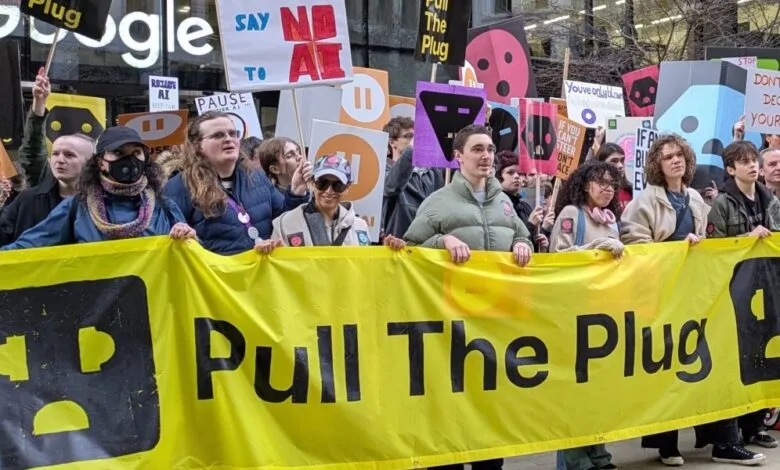
For most participants, the primary objective is awareness. They hope to spark widespread public conversation, using that momentum to demand government intervention and strict regulatory frameworks. The event itself was deliberately organized as an accessible social gathering, inviting even the casually curious to join without a deep prior commitment. This approach appeared successful in drawing a diverse crowd.
One attendee, who works in finance, came along simply because his roommate was going. He noted that a Saturday protest about AI safety felt like a reasonable way to spend an afternoon, especially since the core argument for caution seemed logically sound. He contrasted it with more politically divisive causes, suggesting it’s difficult for anyone to completely oppose the idea of carefully examining AI’s potential dangers. The protest, in his view, revolved around a premise with broad, intuitive appeal.
Following a route through London’s King’s Cross, the march concluded in a Bloomsbury church hall. The space was arranged with rows of chairs, transforming into a grassroots planning session. Participants adorned name tags and began tentative conversations with those around them, united by a shared, monumental mission: to devise a strategy for safeguarding humanity’s future. As they settled into this discussion, the practicalities of daily life called elsewhere, leaving the group to their urgent and collaborative work.
(Source: Technology Review)