Meta’s Metaverse Moves Beyond Virtual Reality
▼ Summary
– Meta is shifting its Horizon Worlds platform to be “almost exclusively mobile,” explicitly separating it from its Quest VR platform.
– This strategic pivot follows massive losses in its Reality Labs VR division and recent layoffs, signaling a significant rethinking of its VR ambitions.
– The move positions Horizon Worlds to compete with popular mobile-first social gaming platforms like Roblox and Fortnite.
– Meta’s leadership states the company remains committed to VR hardware, with a roadmap for future headsets tailored to different audiences.
– The company’s broader strategic focus has shifted from the metaverse to AI, particularly AI wearables and advanced AI models.
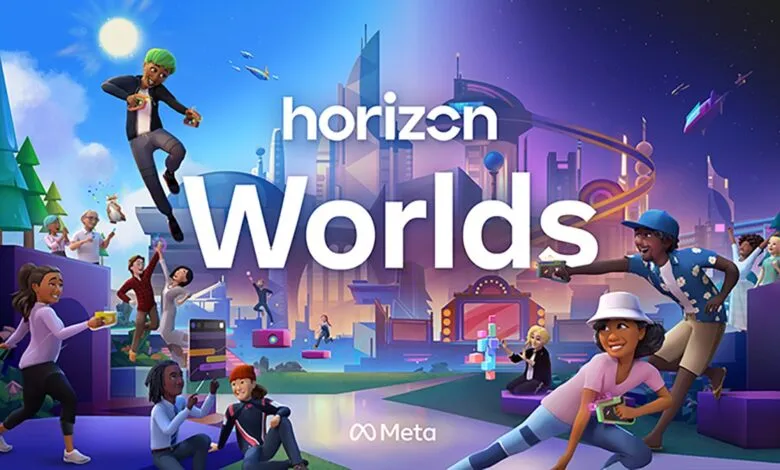
Meta is steering its Horizon Worlds platform in a dramatically new direction, announcing a strategic pivot that will see the immersive environment become “almost exclusively mobile.” This move effectively decouples the virtual world from the company’s Quest virtual reality hardware, signaling a profound shift in the company’s approach to the digital spaces it once championed as the future of the internet. The decision underscores a broader re-evaluation of its ambitions in the face of significant financial pressures within its Reality Labs division.
The financial backdrop for this change is stark. Meta’s Reality Labs division, responsible for VR and smart glasses, has reported staggering losses approaching $80 billion since 2020. This substantial burn rate has precipitated a series of cost-cutting measures, including layoffs affecting roughly 1,500 employees from the unit and the closure of several internal VR game studios. Further evidence of the strategic retreat includes reports that Supernatural, a VR fitness app acquired by Meta, will cease producing new content and enter a maintenance-only phase.
Originally launched as a VR-exclusive experience in 2021 before expanding to web and mobile, Horizon Worlds is now being repositioned to chase a vastly larger audience. Company executives argue that a mobile-first strategy is essential to achieve mainstream scale and compete directly with established platforms like Roblox and Fortnite. This transition represents a clear acknowledgment that the path to widespread adoption may not run through expensive, specialized VR headsets.
Samantha Ryan, Reality Labs’ Vice President of Content, elaborated on the new vision in a company blog post. She emphasized Meta’s unique advantage in leveraging its massive social networks to distribute synchronous social games. “You saw this strategy start to unfold in 2025, and now, it’s our main focus,” Ryan stated. Despite this sharp turn for Horizon Worlds, she confirmed that development of VR hardware continues, with a “robust roadmap of future VR headsets” planned for different audience segments as the market evolves.
The overarching narrative, however, points to a company that has largely moved on from its metaverse-centric vision. Meta’s strategic investments and executive focus have decisively shifted toward artificial intelligence. The company is now channeling resources into developing AI-powered wearables and advancing its proprietary AI models. This new priority was highlighted by CEO Mark Zuckerberg during a recent earnings call, where he expressed a firm belief in the inevitability of AI glasses, stating it is “hard to imagine a world in several years where most glasses that people wear aren’t AI glasses.”
Zuckerberg also pointed to the commercial success of Meta’s current smart glasses, noting that sales tripled in the past year and calling them “some of the fastest-growing consumer electronics in history.” This tangible success in the wearables market, contrasted with the immense losses in VR, provides a clear business rationale for the company’s strategic realignment away from the metaverse and toward a future built on mobile social gaming and pervasive AI.
(Source: TechCrunch)