G42 and Cerebras to Deploy 8 Exaflops of AI Compute in India
▼ Summary
– G42 and Cerebras are deploying an 8-exaflop supercomputer in India to provide AI computing resources for educational, government, and business use.
– The system will be hosted in India and adhere to local data residency, security, and compliance rules to ensure full data sovereignty.
– The project is a collaboration that also includes Abu Dhabi’s MBZUAI and India’s C-DAC, building on prior work like the Nanda 87B language model.
– Major Indian firms Adani and Reliance announced massive investments of $100 billion and $110 billion, respectively, for data center capacity in India.
– OpenAI is partnering with Tata Group for AI compute, and India aims to attract over $200 billion in infrastructure investment with policy incentives.
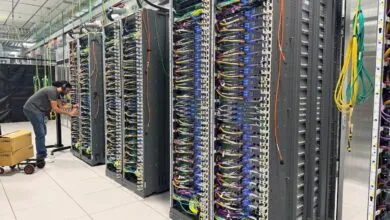
A major new supercomputer project is set to bring an unprecedented level of artificial intelligence computing power to India. The initiative, a collaboration between Abu Dhabi’s technology group G42 and American chipmaker Cerebras, will deploy a system capable of delivering 8 exaflops of AI compute. This infrastructure will be physically hosted within India, adhering strictly to the nation’s data residency, security, and compliance regulations. The primary goal is to provide critical computational resources for AI development to a wide range of local entities, including universities, government bodies, and small-to-medium sized businesses.
Sovereign AI infrastructure is becoming essential for national competitiveness, according to Manu Jain, the CEO of G42 India. He emphasized that this project delivers that capability at a national scale, allowing Indian researchers, innovators, and companies to build AI-native solutions while ensuring complete data sovereignty and security. The system is designed to accelerate both the training and practical use of large-scale AI models, enabling the creation of technology specifically tailored to India’s unique linguistic and cultural landscape.
The partnership extends beyond the two core companies. Academic and governmental institutions are also key players, with Abu Dhabi’s Mohamed bin Zayed University of Artificial Intelligence (MBZUAI) and India’s own Centre for Development of Advanced Computing (C-DAC) participating in the project. This builds on prior collaboration; last year, MBZUAI and G42 introduced Nanda 87B, a large language model proficient in understanding casual Hindi and English, which was developed using Meta’s Llama framework.
Andy Hock, Cerebras’s chief strategy officer, noted that deploying this system in India represents a significant leap forward for the country’s computational capacity and its sovereign AI ambitions. He stated it will empower local developers to build AI that directly addresses India’s specific needs. This announcement was made during the India AI Impact Summit in New Delhi, an event that served as a platform for several major infrastructure commitments.
The summit highlighted a surge of investment in India’s digital future. Domestic conglomerates made substantial pledges, with the Adani Group committing $100 billion to develop up to 5 gigawatts of data center capacity by 2035. Similarly, Reliance announced plans to invest $110 billion over seven years for gigawatt-scale data center projects.
International firms are also deepening their involvement. OpenAI has formed a partnership with the Tata Group to secure 100 megawatts of AI computing power in India as part of its broader Stargate project, with plans to eventually scale this to 1 gigawatt. India’s technology minister Ashwini Vaishnaw outlined a national strategy to attract over $200 billion in infrastructure investment within the next two years, leveraging a combination of tax incentives, state-backed venture capital, and supportive policy frameworks.
This new wave of investment builds upon existing commitments from U.S. technology leaders. Companies including Amazon, Google, and Microsoft have already pledged approximately $70 billion to expand their AI and cloud infrastructure footprint across the country, signaling a broad consensus on India’s pivotal role in the global technology ecosystem.
(Source: TechCrunch)