AI-Powered Personalized Education for Programmers
▼ Summary
– The text is a list of account management and support options for an IEEE user, such as updating profiles and viewing order history.
– It provides contact information for support, with separate phone numbers for US/Canada and worldwide callers.
– The text includes links to organizational information, policies, and help resources like accessibility and terms of use.
– It identifies IEEE as a global nonprofit technical organization focused on advancing technology for humanity’s benefit.
– The footer contains a copyright notice and states that using the site implies agreement with its terms and conditions.
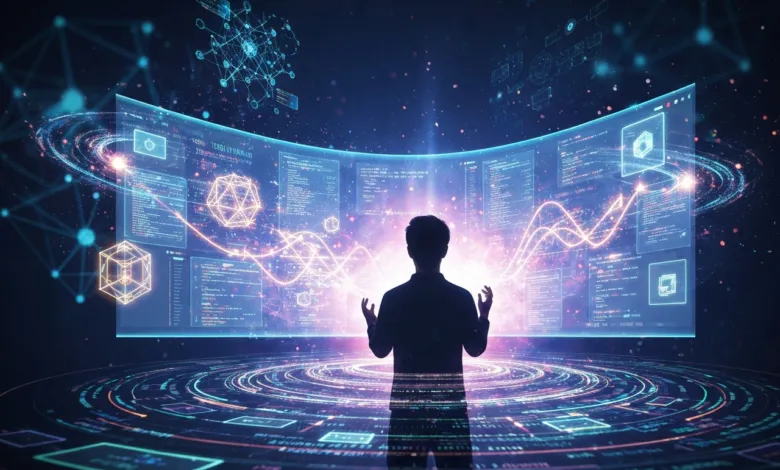
The landscape of programming education is undergoing a profound transformation, driven by the integration of artificial intelligence. AI-powered personalized learning platforms are revolutionizing how developers acquire new skills, offering tailored curricula, adaptive challenges, and real-time feedback that adapts to an individual’s unique pace and understanding. This shift moves beyond the one-size-fits-all model of traditional courses, creating a dynamic educational experience designed for the modern coder.
At the core of this revolution is the ability of AI to analyze a programmer’s specific interactions. By evaluating code submissions, debugging patterns, and time spent on concepts, these systems build a detailed profile of a learner’s strengths and weaknesses. The platform then uses this data to curate a custom learning path, recommending specific modules, projects, or exercises that target knowledge gaps. If a user struggles with recursion, for instance, the system might present additional visual explanations and progressively complex practice problems before advancing to the next topic. This ensures foundational concepts are solidly understood, preventing frustrating knowledge gaps that can derail progress.
Another significant advantage is the provision of intelligent, context-aware assistance. Instead of simply providing an answer, advanced AI tutors can guide a programmer toward the solution by asking probing questions, highlighting logical errors in their approach, or suggesting relevant documentation snippets. This mimics the experience of having a mentor available at any hour, fostering deeper problem-solving skills rather than encouraging a reliance on copied solutions. The feedback is immediate and specific, turning every coding attempt into a valuable learning moment.
For professional developers, these platforms offer powerful upskilling and reskilling tools. The AI can assess an individual’s existing skill set, perhaps in backend development, and design a structured program to branch into a new field like machine learning or cybersecurity. It identifies the most efficient sequence of learning, connecting new information to what the developer already knows, which accelerates mastery and improves knowledge retention. This personalized career roadmap is invaluable in a tech industry where continuous learning is not optional but essential for remaining competitive.
The future of this technology points toward even more immersive and interactive experiences. We can anticipate AI systems that generate unique, complex coding projects based on a learner’s interests, simulate real-world software development environments with AI teammates, or use natural language processing to allow programmers to query concepts in plain English. The goal is to create a fluid, responsive educational ecosystem that grows with the developer throughout their entire career.
Ultimately, AI-driven personalized education empowers programmers to take control of their learning journey. It provides a scalable, efficient, and deeply engaging way to build expertise, turning the often daunting task of mastering new languages and frameworks into a manageable and even enjoyable process. By delivering the right content at the right time, these intelligent systems are not just teaching code, they are cultivating more confident, capable, and adaptable software engineers for the future.
(Source: IEEE Xplore)