Ring’s Search Party backlash: Big questions remain unanswered
▼ Summary
– Ring’s founder is explaining the company’s position after controversy over a Super Bowl ad and its new Search Party feature, acknowledging some imagery may have been problematic.
– The core concern is that Ring’s AI-powered camera network could become a mass surveillance tool, especially as it uniquely allows users to share footage directly with police.
– Ring asserts users have full control over their videos and robust privacy, but critics argue defaults like enabling Search Party show the company ultimately holds the power.
– There is significant worry about the technology’s future direction, including what Search Party might track next and the lack of consent for people recorded by the cameras.
– The article concludes that this rapidly advancing technology risks creating a dystopian surveillance system unless clear limits and responsibilities are addressed.
Following a controversial Super Bowl advertisement and the launch of its new Search Party feature, Ring’s founder has been actively defending the company’s direction. The core issue, however, extends far beyond marketing imagery to the fundamental nature of Ring’s rapidly expanding AI-powered camera network. While the company promotes safety, significant questions persist about privacy, user control, and the potential for these devices to evolve into a pervasive surveillance tool accessible to law enforcement.
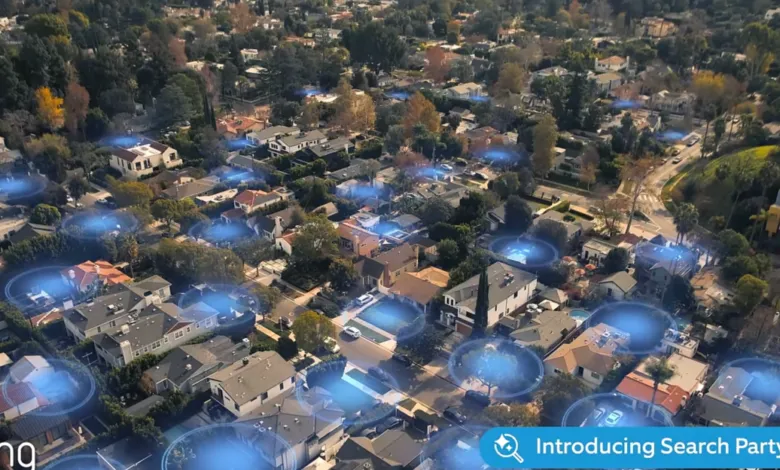
Jamie Siminoff recently stated he understands public concern, suggesting the ad’s graphics may have been triggering. He promised fewer maps in future promotions. Yet this response sidesteps the deeper unease. The problem isn’t the ad’s visuals; it’s the underlying capability of millions of internet-connected cameras, combined with artificial intelligence, to log and analyze public movements. Ring uniquely operates a system called Community Requests, which facilitates direct video sharing between users and police, placing it at the center of a heated debate about modern policing and personal privacy.
The company insists its products do not constitute mass surveillance, emphasizing robust privacy protections and asserting that users command their data. Despite these assurances, a palpable sense of distrust remains. Siminoff continues to advocate for more cameras as a societal good, a predictable stance from a security camera executive. He argues that video evidence is crucial for uncovering truth, claiming Ring’s work is “not just like unfettered mass surveillance.” This narrative, however, fails to adequately address how the company will govern its own powerful technology or define clear ethical boundaries. Critically, will features like Search Party be limited to locating lost pets, or will they expand to tracking people?
A major point of contention is where accountability lies once footage leaves a user’s device. Ring states that camera owners have complete control over sharing, but this places the burden of responsible use squarely on individuals. This perspective ignores a key reality: the people recorded by these doorbells and security cameras have no say in the matter. Furthermore, Ring demonstrated its own control by activating Search Party by default for all users, a decision that undermines the message of absolute user agency. There is also no promise that current default settings are permanent, leaving room for future policy shifts that could further erode privacy.
Siminoff confirmed plans to expand Search Party’s functionality, mentioning adding the ability to search for cats. This incremental expansion prompts a vital question: what follows? The integration of widespread camera networks with advanced AI is accelerating, and for many observers, it feels perilously close to crossing a line. The technology’s potential to create a searchable record of daily life, paired with direct law enforcement links, generates legitimate fears of a dystopian monitoring system. Until Ring provides transparent, concrete answers about limits, data stewardship, and the rights of those recorded, public skepticism will only grow.
(Source: The Verge)