LLM Consistency: The New SEO KPI for Recommendations

▼ Summary
– Search is shifting from traditional blue links to AI-generated answers in platforms like Google AI Overviews and ChatGPT, making traditional SEO metrics like rankings and CTR insufficient.
– A new metric called LLM Consistency and Recommendation Share (LCRS) measures how reliably and competitively a brand appears in AI-generated responses, addressing this measurement gap.
– LCRS evaluates visibility across three dimensions: variation in user prompts, different LLM platforms, and consistency over time, focusing on repeatable presence rather than one-off mentions.
– The metric is particularly valuable for industries like SaaS, finance, and health, where AI recommendations heavily influence user decisions during comparison and discovery phases.
– LCRS complements, rather than replaces, traditional SEO KPIs, signaling a broader evolution in SEO from optimizing for page rankings to engineering for brand presence and trust in AI-driven search.
The landscape of online discovery is fundamentally changing, moving beyond the familiar list of blue links. Users now frequently find answers directly within AI-generated responses from tools like Google’s AI Overviews, ChatGPT, and Perplexity. In this new paradigm, a website’s visibility and influence are no longer solely tied to its ranking position or whether it earns a click. This evolution demands a fresh approach to measurement, as traditional SEO key performance indicators fall short of capturing impact in a recommendation-driven environment.
Legacy metrics like rankings, impressions, and click-through rate were built for a different search model. They excel when visibility is directly linked to a page’s position on a results page and user engagement requires a physical click. However, in experiences mediated by large language models, that direct relationship breaks down. A page can hold the number one ranking yet never be cited within the AI’s synthesized answer. Conversely, an LLM might reference a source with lower traditional visibility. This creates a significant measurement gap: a brand can exert influence and shape decisions without generating a trackable website visit, an impact invisible to conventional analytics.
The core issue is a difference in stages of visibility. Traditional SEO analytics effectively measure indexing and ranking. The new competitive battleground is recommendation, being actively surfaced as a solution within the answer itself. This is where influence is now being decided, and a new performance metric is required to quantify it.
LLM Consistency and Recommendation Share (LCRS) is designed to fill this measurement void. It evaluates how reliably and competitively a brand, product, or page is recommended by AI systems across various search and discovery interfaces. Essentially, LCRS answers a critical question: when users ask LLMs for guidance, how often and how consistently does a specific brand appear in the response? This metric assesses visibility across three key dimensions: variation in user prompts, different LLM platforms, and stability over time. It moves beyond anecdotal screenshots to provide a repeatable, comparative benchmark for performance.
LCRS comprises two interconnected components: consistency and share. Consistency measures repeatability. Because LLM outputs are probabilistic, a single mention is not a reliable signal. High consistency means a brand surfaces across multiple, semantically similar prompts (e.g., “best project management tools” and “top alternatives to Asana”), remains stable in recommendations over weeks, and appears across multiple LLM platforms like ChatGPT and Google AI Overviews.
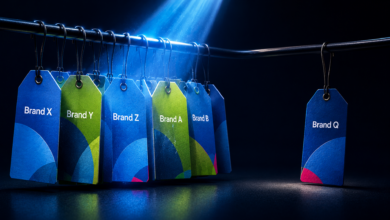
Recommendation share measures competitive presence. It tracks how frequently a brand is suggested relative to others in its category. Not every mention carries equal weight; being framed as a preferred choice with contextual justification holds more value than a passing reference in a list. Recommendation share captures the relative portion of the “answer space” a brand occupies when LLMs respond to comparison or “best for” queries.
Measuring LCRS effectively requires a structured, scalable approach. It begins with selecting a representative set of prompts for a category, including variations for “best,” comparisons, alternatives, and specific use cases. Tracking is most insightful at the category level, where LLMs must actively choose which brands to surface. Executing these prompts and collecting the data quickly becomes a task for automation, as manual logging is impractical for meaningful analysis. While automation handles the volume, human review remains essential for interpreting nuances in the responses.
The true value of LCRS emerges when tracked directionally over time, observing weekly volatility and monthly trends to see if a brand’s recommendation presence is strengthening or weakening. It is particularly valuable in specific scenarios. For marketplaces and SaaS platforms, where LLMs often guide tool discovery, LCRS reveals competitive dynamics. In “Your Money or Your Life” sectors like finance or health, consistent recommendation signals a high level of perceived authority. It is also crucial for comparison-driven searches, capturing influence at the early, formative stages of a user’s decision-making process.
It is important to recognize the limitations of this metric. LCRS provides directional insight, not absolute certainty. LLM outputs are inherently non-deterministic and subject to change due to model updates. Programmatic sampling may not perfectly mirror every live user interaction, but it provides a consistent baseline for measuring relative change. Crucially, LCRS does not replace traditional SEO KPIs; it complements them by addressing the growing layer of search where influence occurs without a click.
The emergence of LCRS signals a broader evolution in search engine optimization. SEO is progressing from page-level optimization toward what could be termed search presence engineering. The goal shifts from ranking a single URL to ensuring a brand is consistently retrievable, understandable, and deemed trustworthy by AI systems. In this environment, cohesive brand authority and clear communication across multiple touchpoints become more critical than isolated page authority.
The essential shift for SEO professionals is from optimizing solely for position to optimizing for presence and recommendation. LCRS offers a practical framework to explore this new territory. The path forward involves thoughtful experimentation, sampling relevant prompts, tracking patterns over time, and integrating these insights to complement a holistic view of search performance.
(Source: Search Engine Land)