Germ launches as Bluesky’s first private messenger integration
▼ Summary
– Bluesky has integrated Germ Network’s technology to become the first decentralized social network offering native end-to-end encrypted (E2E) messaging within its app.
– This integration demonstrates how open ecosystems like Bluesky’s AT Protocol allow third-party developers, not just the parent company, to build new features for the platform.
– Germ’s standalone app saw a 5x increase in daily active users following the official integration announcement with Bluesky.
– The startup Germ, founded by a former Stanford scholar and an Apple privacy engineer, uses the newer Messaging Layer Security (MLS) standard and the AT Protocol instead of requiring phone numbers.
– Bluesky’s protocol team currently prioritizes letting specialized third parties like Germ handle E2E encryption due to its complexity, rather than building its own system.
The decentralized social network Bluesky has taken a significant step toward user privacy by integrating a new end-to-end encrypted messaging service directly into its platform. This integration, powered by startup Germ Network, introduces Germ DM as the first private messenger to launch natively within the Bluesky app. This development highlights a core advantage of open social ecosystems, where new features can emerge from the broader community, not solely from the platform’s own developers. Alongside this launch, Germ is publishing technical guidance to enable other applications built on the foundational AT Protocol, the same system that powers Bluesky, to implement similar private messaging capabilities.
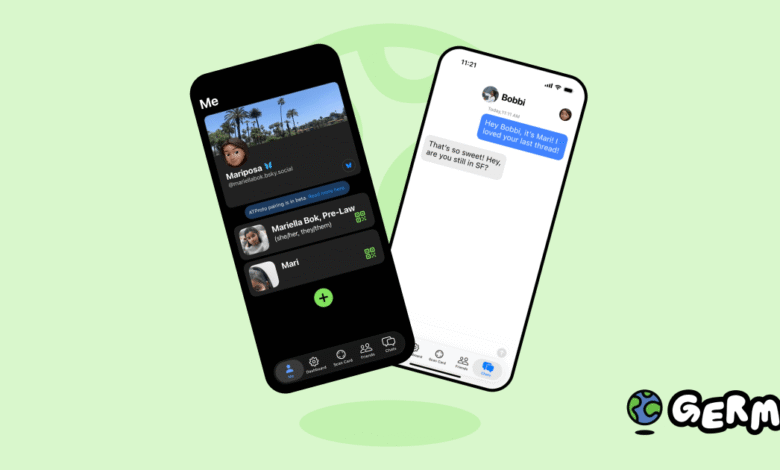
This experimental integration allows Germ users to add a special button to their Bluesky profiles. When someone clicks this badge, it initiates an end-to-end encrypted conversation directly within the Bluesky environment. The functionality leverages an iOS App Clip, a lightweight and temporary application experience, to quickly authenticate users via their ATProto handle and begin messaging. While users are encouraged to download the full Germ DM app, it remains optional for basic use. To add the badge to their own profile, a user needs to download the Germ iOS app and authenticate their Bluesky credentials there.
The California-based startup behind this technology was founded by communications scholar Tessa Brown and former Apple privacy engineer Mark Xue. Their vision is to provide a modern alternative to established encrypted platforms like iMessage, Signal, and WhatsApp. Germ is built on newer technological standards, specifically the Messaging Layer Security (MLS) protocol approved by the Internet Engineering Task Force and the AT Protocol. A key differentiator is that Germ does not require a phone number; it integrates with ATProto for identity, ensuring that messages cannot be decrypted by any other service, including Bluesky or Germ itself.
The path to this official integration began with a private beta last August, initially using “magic links” in user bios. The new profile badge offers a more seamless and visible alternative. Following the announcement of the integration, Germ reported a substantial surge in engagement, with daily active users increasing fivefold. The company has been collaborating closely with the ATProto developer community, including Bluesky’s own teams, since last year’s ATmosphere Conference.
Germ’s Chief Technology Officer, Mark Xue, emphasized the collaborative and transparent process, noting that feedback from the private beta clearly indicated a user preference for native user interface elements over bio links. Bluesky’s head of product, Alex Benzer, led the app changes as the company explored integrating third-party services. Germ CEO Tessa Brown praised the partnership, stating that Bluesky’s fast-paced, user-centric approach made them an ideal partner to be the first secure messenger embedded natively in the app.
This move comes as Bluesky itself has consciously decided not to build its own end-to-end encryption system at this time. Protocol engineer Daniel Holms has explained that implementing robust E2EE is inherently complex, and that complexity would extend to every developer building a client app. Xue agrees with this decentralized philosophy, aligning with the ATProto belief that people should choose their own communication tools. He believes that by solving these difficult privacy challenges in a safe and user-friendly manner, users will continue to select Germ.
The integration’s influence is already spreading, with another AT Protocol-based client, Blacksky, adding support for the Germ badge shortly after Bluesky. Looking ahead, the Germ team is currently focused on enhancing everyday messaging features rather than monetization. However, future paid features are being considered, potentially aimed at professional power users like creators, journalists, and politicians. These could include support for managing multiple handles and AI-powered screening for initial messages from new connections.
(Source: TechCrunch)