Airbnb’s “Reserve Now, Pay Later” Goes Global
▼ Summary
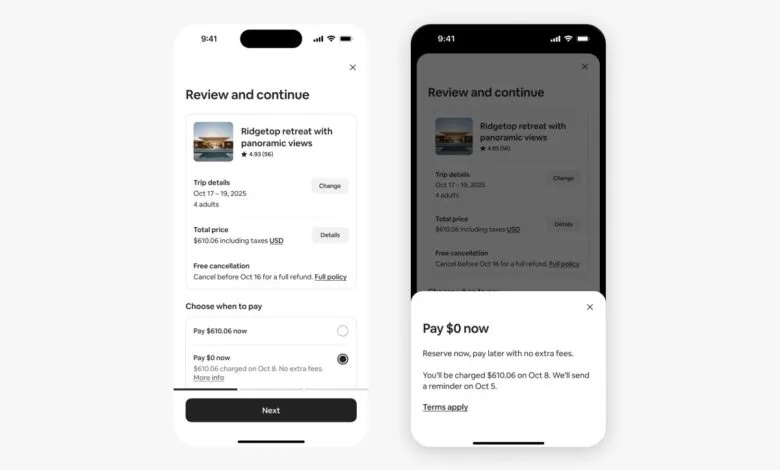
– Airbnb has globally launched its “Reserve Now, Pay Later” feature, allowing users to book without immediate payment and cancel without upfront loss.
– The feature is available for properties with flexible or moderate cancellation policies, charging users closer to their check-in date.
– It saw 70% adoption for eligible bookings and contributed to growth in nights booked, longer lead times, and a shift toward larger homes in Q4 2025.
– While the overall cancellation rate increased slightly, the rate was higher among users of this feature but deemed not materially significant.
– A prior survey found 60% of U.S. travelers value flexible payment options, and Airbnb has experimented with similar pay-later products since 2018.
Airbnb has expanded its “Reserve Now, Pay Later” feature to a worldwide audience, allowing travelers to confirm their accommodations without an immediate financial commitment. This global rollout follows a successful introduction in the United States last year. The option is designed to make travel planning more flexible, letting guests secure a booking and pay closer to their check-in date, provided the property has a flexible or moderate cancellation policy. This approach mirrors popular installment payment models in retail, aiming to make larger travel expenses more manageable by spreading out the cost.
Since its initial launch, the feature has seen impressive traction, with 70% adoption for eligible bookings. During the company’s recent earnings discussion, Airbnb’s Chief Financial Officer, Ellie Mertz, highlighted the product’s positive impact. She noted that “Reserve Now, Pay Later” contributed to growth in nights booked during the last quarter. The feature also encouraged guests to plan further in advance and showed a trend toward booking larger entire homes, particularly those with four or more bedrooms, which helped increase the platform’s average daily rate.
Naturally, offering this flexibility comes with considerations. Mertz acknowledged that the overall cancellation rate on the platform increased slightly, from 16% to 17%, and was somewhat higher among users of the upfront booking product. However, she characterized this increase as not hugely significant in the context of the platform’s total cancellation activity. The strategic benefit of attracting more bookings and enabling longer planning horizons appears to outweigh this marginal shift.
Consumer demand for such payment options is clear. A survey conducted last year in partnership with market research firm Focaldata revealed strong interest among U.S. travelers. The data showed that 60% of participants consider a flexible payment option important when booking a holiday, with 55% stating they would actually use one if available.
This global expansion is the latest step in Airbnb’s ongoing exploration of flexible payment solutions. The company first tested a partial-payment model back in 2018, allowing bookings with an initial payment of 20% or 50%. More recently, in 2023, Airbnb collaborated with the fintech company Klarna to offer a plan letting users pay for stays in four installments over a six-week period. The worldwide launch of “Reserve Now, Pay Later” represents a significant scaling of this financial flexibility, potentially opening up travel to a broader range of guests by easing the burden of upfront costs.
(Source: TechCrunch)