AI Helps California Town Catch Bike Lane Blockers
▼ Summary
– Santa Monica will be the first U.S. city to use AI-equipped parking enforcement cars to detect bike lane violations starting in April.
– The city will add Hayden AI’s scanning technology to seven parking enforcement vehicles, expanding its use beyond existing cameras on buses.
– Hayden AI’s bus-mounted cameras, which detect bike lane and bus zone violations, are already in use in several U.S. cities and have thousands of installations worldwide.
– The company’s technology previously identified over 1,100 parking violations at UC San Diego in a 59-day period, with 88% being bike lane blockages.
– The system aims to improve safety for cyclists and bus riders by reducing illegal parking and the need for buses to swerve out of their lanes.
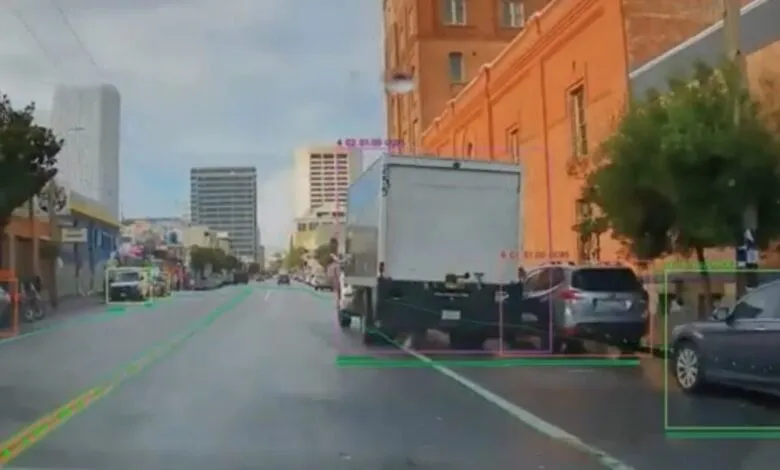
This spring, a Southern California beach community is pioneering a new approach to traffic safety by deploying artificial intelligence on municipal parking enforcement vehicles to identify bike lane obstructions. The City of Santa Monica will equip seven of its parking enforcement cars with scanning technology from Hayden AI starting in April, marking a significant expansion of a system already in use on the city’s public buses.
The primary goal is to enhance safety for cyclists by systematically identifying and deterring illegal parking. “The more we can reduce the amount of illegal parking, the safer we can make it for bike riders,” explained Charley Territo, chief growth officer at Hayden AI. The company’s technology is designed to automatically detect vehicles blocking designated bike lanes and bus zones.
This initiative builds on existing deployments in other urban areas. Hayden AI’s camera systems are already operational on buses in Oakland and Sacramento, California, as well as in major cities like New York City, Washington, D.C., and Philadelphia. The company reported a global installation of over 2,000 systems by late 2025, demonstrating a growing adoption of automated traffic monitoring.
The effectiveness of the technology is supported by data from pilot programs. During a recent 59-day period at the University of California, San Diego, the AI system flagged more than 1,100 parking violations. A striking 88 percent of those citations were for blocking bike lanes, highlighting a persistent problem for urban cyclists.
Beyond protecting bike lanes, the system aims to improve overall transit efficiency and safety. Municipalities adopt the technology to help buses maintain their schedules by clearing obstructions from dedicated lanes. This also reduces a key risk factor for accidents. “We do that by reducing one of the biggest causes of collisions with buses, moving out of their lanes,” Territo noted. The logic is straightforward: fewer lane deviations mean fewer potential crashes.
The move in Santa Monica represents a shift toward proactive, automated enforcement in public spaces, using data-driven tools to address specific traffic pain points and create safer streets for all road users.
(Source: Ars Technica)