Helion’s Fusion Reactor Hits Record Temps Ahead of 2028 Goal
▼ Summary
– Helion’s Polaris prototype reactor has achieved plasmas of 150 million degrees Celsius, a key milestone toward its commercial power plant target.
– The company is the first fusion startup to operate using deuterium-tritium fuel, which dramatically increased its fusion power output as heat.
– Helion’s reactor design uses a field-reversed configuration and aims to generate electricity directly from the fusion reaction’s magnetic field, not from heat.
– The company plans to use deuterium-helium-3 fuel in the future, which is better suited for its direct electricity generation approach.
– Helion has a contract with Microsoft to supply electricity by 2028 from a larger commercial reactor called Orion, which it is currently building.
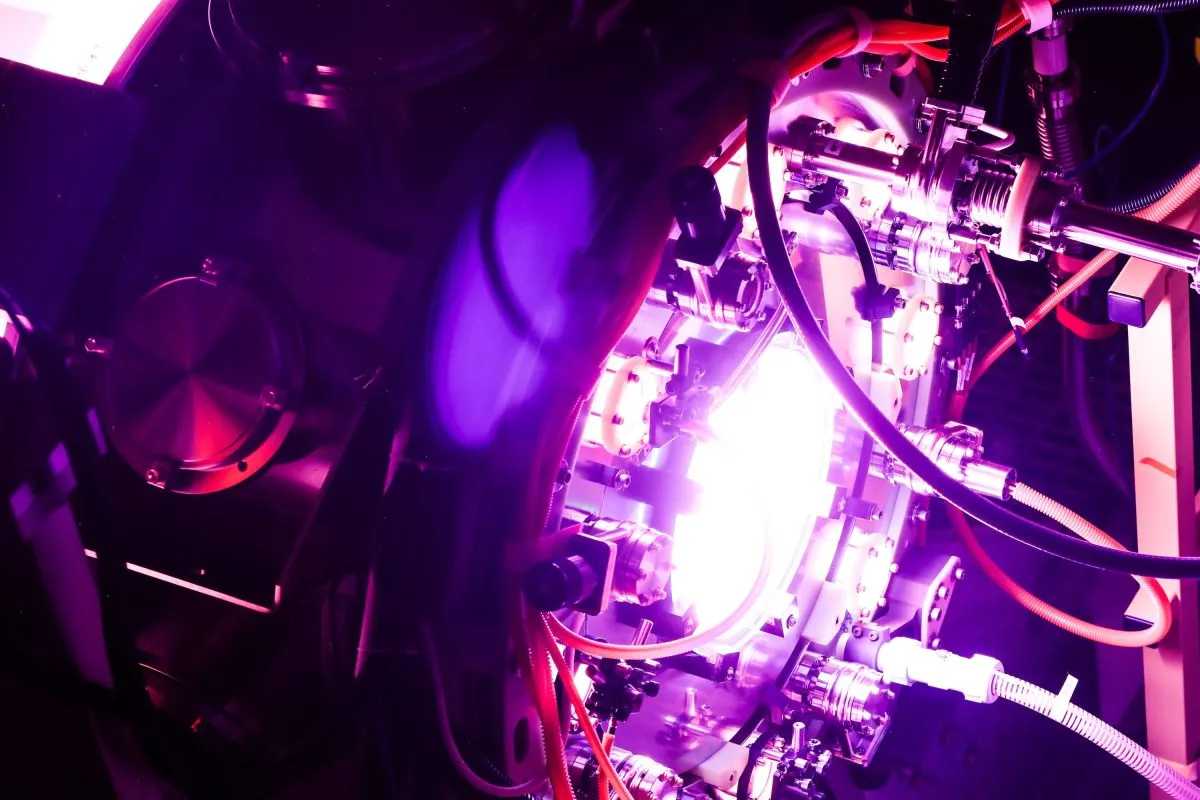
The race for commercial fusion power has intensified, with Helion Energy achieving a critical breakthrough by heating plasma to 150 million degrees Celsius in its Polaris prototype reactor. This temperature represents seventy-five percent of the ultimate 200 million-degree target the company believes is necessary for a viable power plant. Based in Everett, Washington, Helion is pursuing an ambitious timeline, underscored by a power purchase agreement with Microsoft to deliver electricity by 2028 from a larger commercial reactor named Orion.
David Kirtley, Helion’s CEO and co-founder, expressed significant enthusiasm about this progress. He emphasized that Polaris is operating with deuterium-tritium fuel, marking Helion as the first private fusion firm to do so. The use of this fuel mixture resulted in a dramatic and expected increase in fusion power output as heat. This milestone arrives amid a surge of investment in fusion technology, with competitors like Commonwealth Fusion Systems and Type One Energy also securing hundreds of millions in funding. Helion itself raised $425 million last year from notable backers including Sam Altman and SoftBank.
Helion’s technical approach distinguishes it from many rivals. While most companies, such as Commonwealth Fusion Systems, use tokamak designs aiming for temperatures above 100 million degrees, Helion employs a field-reversed configuration reactor. This design features an hourglass-shaped chamber where fuel is injected at the ends, turned into plasma, and then magnetically accelerated toward the center. The plasmas merge and are further compressed by magnets, reaching the record temperature in less than a millisecond.
A fundamental difference lies in energy extraction. Instead of capturing heat to drive a turbine, Helion’s system generates electricity directly from the fusion reaction’s magnetic field. Each pulse pushes against the reactor’s magnets, inducing a current that can be harvested. The company has spent the last year refining circuits to improve the efficiency of this electricity recovery. For future commercial operations, Helion plans to shift from deuterium-tritium to deuterium-helium-3 fuel. This blend produces more charged particles, which interact more forcefully with magnetic fields, making it ideally suited for Helion’s direct electricity conversion method.
The shift to helium-3 presents a unique challenge, as the isotope is scarce on Earth but abundant on the Moon. Helion intends to produce its own supply initially by fusing deuterium nuclei, then purifying and reusing the helium-3 created as a byproduct of some reactions within the operational reactor. Kirtley noted that developing this fuel cycle has been smoother than anticipated, with the company achieving high efficiency in production purity and throughput.
Looking ahead, Helion’s immediate focus is not on achieving scientific breakeven but on the practical goal of generating electricity. The Polaris prototype is a stepping stone toward the Orion reactor, which is under construction to meet the Microsoft contract. Kirtley suggested that as the industry evolves, other companies may also adopt helium-3 fuel to pursue similar efficiency gains from direct electricity recovery, potentially opening a future market for Helion’s fuel production expertise.
(Source: TechCrunch)