Kia PV5 Electric Van: Futuristic Design Meets Practicality
▼ Summary
– Vans are crucial but often overlooked vehicles that transport goods and food, yet their basic design has remained largely unchanged for decades.
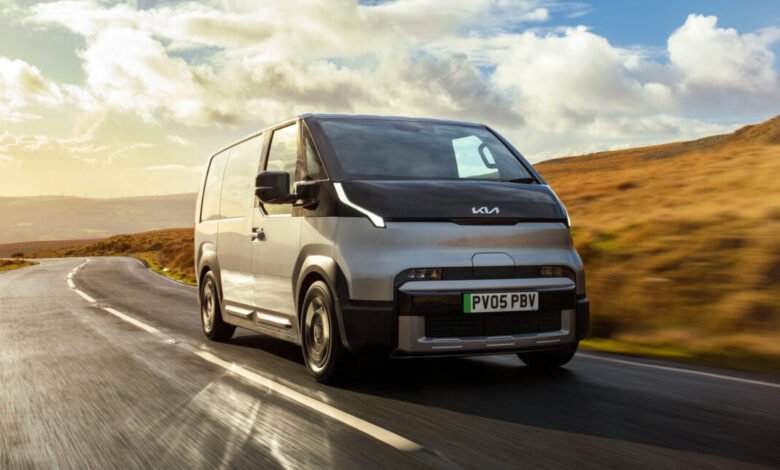
– Kia’s new PV5 is the company’s first electric van, developed by engineers inspired by their recent EV successes.
– The PV5 is highly modular, offering multiple configurations like Passenger, Cargo, Crew, and Chassis Cab models, with partners ready to create custom conversions.
– It is built on Kia’s “Platform Beyond Vehicle” (PBV) strategy, featuring a flexible Electric Global Modular platform that can accommodate different battery sizes.
– For the UK market, it offers two battery and power options with practical ranges and a 30-minute fast-charge capability, prioritizing utility over high speed.
While vans often operate in the background of daily life, their role in logistics and transport is indispensable. Kia’s PV5 electric van represents a significant shift from the traditional combustion-engine box, injecting futuristic innovation into a segment ripe for change. This vehicle is not just an electrified workhorse; it’s a modular platform designed for adaptability, signaling where practical transportation is headed.
The PV5 breaks the mold by offering multiple configurations straight from the factory, with a network of partners ready for further customization. Buyers can select a PV5 Passenger model for moving people, a PV5 Cargo for moving goods, a PV5 Crew for a mix of both, or a PV5 Chassis Cab as a blank canvas for specialized builds. This flexibility makes it highly attractive not only for commercial fleets but also for the growing “vanlife” community, where converters are eager to create eco-friendly mobile homes.
Underpinning this versatility is Kia’s Electric Global Modular Platform, a core part of its “Platform Beyond Vehicle” or PBV strategy. This approach suggests the vehicle is more than just a mode of transport; it’s a scalable foundation for various services. The architecture supports different battery sizes, allowing for tailored range and power to suit specific duties.
For markets like the UK, powertrain options include a 52 kWh or a 71.2 kWh battery pack, paired with motors producing either 120 hp or 160 hp. Both deliver a solid 184 lb-ft of torque, providing the necessary grunt for urban deliveries or loaded trips. Driving range varies accordingly, with the cargo model offering between 184 miles on the smaller battery and up to 256 miles with the larger pack on the WLTP test cycle. Recharging is conveniently quick, with a 150 kW charger capable of restoring the battery from 10 to 80 percent in about thirty minutes.
Performance is tuned for efficiency and reliability rather than speed. Acceleration from zero to sixty-two miles per hour takes over ten seconds, a deliberate choice that prioritizes energy conservation and vehicle longevity. The PV5 is built for the long haul, focusing on practicality, total cost of ownership, and seamless integration into business operations over outright pace.
Kia’s development process involved extensive research with real van users to address their actual needs. The result is a thoughtfully designed vehicle that maintains a familiar, functional one-box shape while introducing advanced electric propulsion and smart modularity. The PV5 is poised to modernize commercial transport, offering a cleaner, quieter, and more customizable solution for keeping the world moving.
(Source: Ars Technica)