OLED Gaming Monitor Endures 3,000-Hour Burn-In Test

▼ Summary
– A two-year, 3,000-hour real-world test of an LG OLED monitor showed only minimal, barely perceptible burn-in from static elements in Overwatch and DaVinci Resolve.
– The test was conducted with default panel care settings, except for disabling pixel shift, and involved high brightness and applications with many static UI elements.
– The observed image retention was very difficult to notice in normal use, and the monitor’s overall brightness saw only a negligible drop from 262 to 258 nits.
– The results suggest that for typical, varied usage, burn-in risk is low, but consistent, prolonged display of the same static elements (like a game HUD) increases the chance.
– The recommendation is to keep all panel care features enabled, especially pixel refresh, as burn-in is an inherent byproduct of OLED technology that requires user caution.
For anyone considering an OLED gaming monitor, the specter of permanent image retention, or burn-in, is often the single biggest hesitation. This concern persists despite manufacturers implementing various protective technologies. A new long-term test provides some of the most practical, real-world data yet on how a modern OLED panel holds up under sustained use, offering reassuring insights for most users.
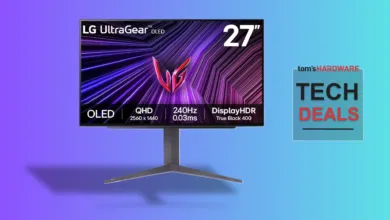
A detailed experiment conducted over two years put an LG 32GS95UE-B 32-inch OLED monitor through its paces for more than 3,000 hours. The user primarily played Overwatch 2 and used creative software like DaVinci Resolve and Fusion 360, all applications filled with static interface elements like health bars, toolbars, and scroll bars. This usage pattern creates a demanding, realistic scenario rather than an artificial stress test. Notably, the monitor’s pixel shift feature was intentionally left disabled throughout the entire period.
After this extensive duration, a meticulous inspection revealed minimal signs of wear. The most noticeable effect was very slight image retention from the Overwatch health bar and player card in the bottom-left corner, a result of nearly 500 hours in that specific game. This retention was only faintly visible on solid gray backgrounds and required image editing to be clearly demonstrated. An even subtler effect was noted from DaVinci Resolve’s timeline scroll bars. Critically, the monitor’s peak brightness saw a negligible drop, from 262 nits to 258 nits, indicating excellent overall health.
The findings underscore a key point: burn-in risk is heavily influenced by individual usage habits. In this case, the static elements from one frequently played game and two productivity applications created a “torture test” environment. Users who rotate through different games and content will naturally spread wear more evenly across the panel, likely achieving even better long-term results. Conversely, habits like keeping the Windows taskbar visible or using window snapping can make those persistent screen areas the most vulnerable over time.
It’s important to view slight image retention as an inherent characteristic of OLED technology rather than a catastrophic flaw. The organic compounds in the pixels degrade at varying rates depending on use, making some level of uneven wear a physical inevitability over thousands of hours. The video from this test emphasizes that the minor retention observed was not perceptible during normal, everyday use.
For optimal panel longevity, enabling all built-in protective features is highly recommended. Tools like pixel refresh, which was disabled for this test, actively work to compensate for wear and are crucial for long-term health. While the technology has limits, modern OLED monitors come with generous warranty coverage, often up to three years, which provides a safety net for early, severe issues. For the vast majority of gamers, this real-world evidence suggests that with sensible use and enabled protections, OLED’s unparalleled contrast and response times can be enjoyed without significant anxiety over durability.
(Source: Tom’s Hardware)