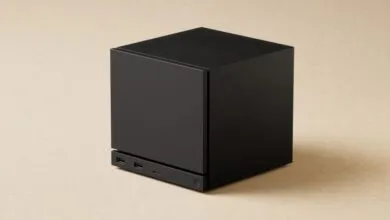
Steam Machine’s $700 Price Tag Could Spell Its Doom

▼ Summary
– Valve announced it must revisit the Steam Machine’s shipping schedule and pricing due to rising component costs like RAM and storage.
– Analysts are divided on how much of these increased costs Valve will pass on to consumers.
– One analyst estimates the low-end 512GB model could now cost between $599 and $629, with the high-end 2TB model between $849 and $899.
– Another analyst warns that a starting price above $599 would lead to poor sales, stating $700 is a “death sentence” and $1,000 is “unsellable.”
– Other analysts believe prices are now approaching or exceeding $1,000, with one predicting the 512GB model could crest $1,000 and the 2TB model could reach $1,300 to $1,500.
The potential price point for Valve’s Steam Machine is becoming a critical concern for its market viability. Recent statements from the company indicate that rising costs for essential parts like memory and storage are forcing a reassessment of both the launch timeline and final pricing. This shift has sparked intense debate among industry observers about how much of these increased expenses will ultimately be passed on to consumers, casting doubt on the system’s ability to compete effectively in the living room gaming space.
Industry analysts are divided on the final figures, but there is a consensus that costs are climbing. One perspective suggests the 512GB model could see a price increase of $50 to $75, potentially landing between $599 and $629. The higher-end 2TB version might reach $849 to $899. However, other experts paint a much starker picture, with estimates suggesting the base model could approach or even exceed $1,000, putting the premium version in the $1,300 to $1,500 bracket.
The consensus among several analysts is that a starting price significantly above $600 could be disastrous for the platform’s adoption. One prominent analyst was particularly blunt, stating that a $700 tag would be a “death sentence” for sales, while a $1,000 price point would render the machine virtually “unsellable” to the mainstream audience it aims to capture. This highlights the delicate balance Valve must strike between covering its manufacturing costs and presenting a compelling value proposition against established consoles.
The core challenge lies in the Steam Machine’s positioning. It is designed to bridge the gap between a custom-built gaming PC and a traditional plug-and-play console. If the price escalates too high, it loses its competitive edge against both more affordable consoles and the very PC market it seeks to simplify. Consumers evaluating a $1,000 living room device may simply opt to build their own PC or stick with a PlayStation or Xbox, which offer a vast library of optimized games at a lower entry cost.
Ultimately, Valve’s handling of this pricing crisis will be a major test. The company’s reputation for consumer-friendly practices is on the line. Passing on the full brunt of component costs could alienate the core gaming community and doom the hardware initiative before it even begins. The coming weeks will reveal whether Valve can find a solution that keeps the Steam Machine financially accessible or if the project succumbs to the economic pressures of the hardware market.
(Source: Ars Technica)