Anthropic’s Super Bowl Ad Took a Swipe at OpenAI
▼ Summary
– Anthropic aired a Super Bowl ad claiming its Claude AI will remain ad-free, directly contrasting with rival OpenAI’s plans to introduce ads.
– OpenAI’s CEO called the ad’s portrayal dishonest, clarifying that its planned ads will be clearly labeled and non-intrusive.
– The clash represents a shift in AI competition from technical features to brand virtue signaling and narrative warfare.
– The article argues this framing reduces a complex business trade-off (monetizing costly AI) to a simplistic “ads are bad” morality play.
– This episode highlights how nuanced discussions about AI costs and access are being overshadowed by marketing designed for investors and public perception.
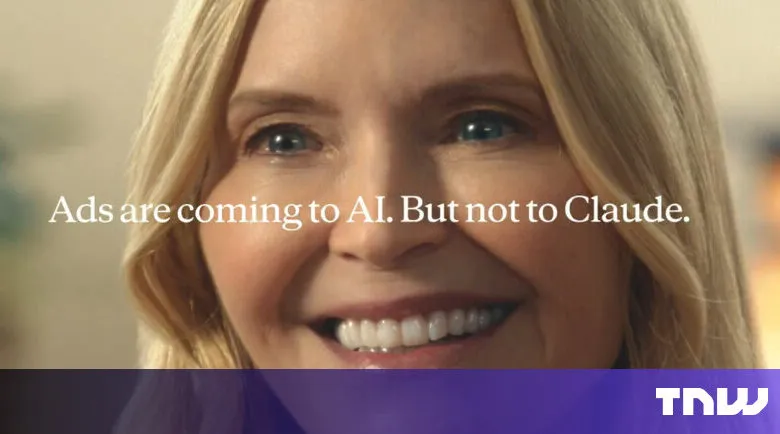
The Super Bowl is famous for its high-stakes, multi-million dollar commercials, but this year’s event featured an unexpected twist: a direct marketing attack between artificial intelligence companies. Anthropic used its coveted airtime to launch a pointed critique of rival OpenAI’s potential advertising plans, declaring that “Ads are coming to AI, but not to Claude.” Their ad depicted a chatbot awkwardly inserting product pitches into a conversation, starkly contrasting with their own promise of an ad-free experience. This move represents a significant shift in the AI industry’s competitive landscape, moving the battle from technical specifications into the arena of public branding and perceived corporate ethics.
At its core, this public spat is less about technological capability and more about corporate identity. OpenAI, grappling with immense operational costs, has indicated it may introduce clearly labeled, non-intrusive advertisements within its free and lower-cost ChatGPT tiers. Anthropic has strategically positioned this business reality as a point of differentiation, framing itself as the principled, ad-free alternative. However, this framing simplifies a complex issue into a binary moral choice. Introducing ads is a standard monetization strategy for expensive-to-operate services, not an inherent ethical breach. OpenAI’s Sam Altman called Anthropic’s portrayal “clearly dishonest,” emphasizing that their approach would not involve the disruptive, mid-conversation promotions the ad satirized.
This clash underscores a troubling trend where ethical positioning is wielded as a competitive marketing weapon. The nuanced discussion about the real trade-offs in running massive AI models—balancing cost, accessibility, and user experience—is being overshadowed by a reductive narrative. The debate is presented as a simple story of good versus evil, where “ads are bad” and their absence is inherently virtuous. This ignores the practical economics at play: ads can subsidize free access for millions, while premium, ad-free tiers remain an option for those willing to pay. It’s a business model question, not a definitive moral absolute.
The situation takes on an added layer of irony considering both companies are currently unprofitable. They are competing fiercely for narrative dominance alongside market share. Spending a fortune on a Super Bowl ad to debate chatbot advertising feels more like a performance for investors and industry commentators than a genuine service to users. It highlights how the broader AI discourse often loses nuance, favoring sound bites and symbolic gestures over substantive explanation. Complex decisions about cost structures and data policies are distilled into satirical commercials aimed at millions.
This episode signals that the AI narrative is increasingly shaped by curated messaging designed to win applause rather than foster informed debate. If the industry is to develop responsible and sustainable monetization strategies, that conversation must happen away from the spectacle of game-day advertising and strategic brand posturing. The real work involves transparently discussing trade-offs with users, not reducing pivotal business decisions to a punchline in a multi-million dollar commercial.
(Source: The Next Web)