Beirut.com Just Killed the Search Bar (And Why It’s Brilliant)
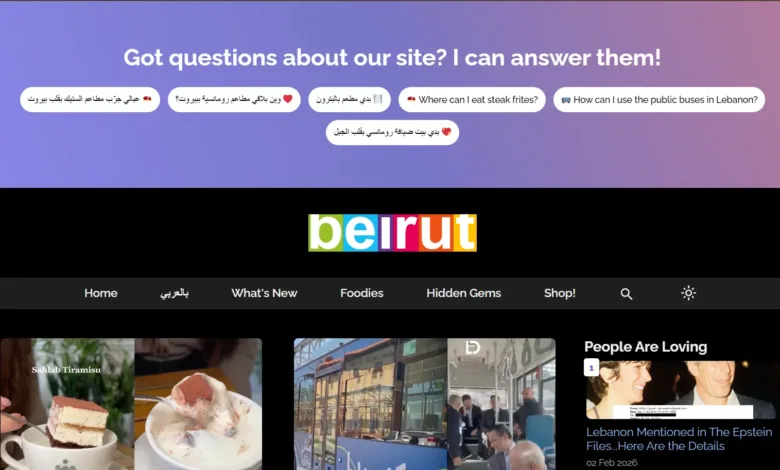
Directory sites usually die a slow death. They get clunky, the search filters break, and eventually, everyone just goes to Google Maps or TikTok.
Beirut.com isn’t waiting for that to happen.
After 15 years of manually curating the best spots in Lebanon, they just flipped the switch on “AI Mode.” It’s a massive UX pivot that ditches the traditional search bar for a conversational interface. And for anyone watching the local tech space, it’s a textbook example of how niche publishers can survive the generative AI wave.
The “RAG” Advantage
Here’s the technical reality: If you ask ChatGPT about a “hidden gem in Mar Mikhael,” it might hallucinate a bar that closed three years ago.
Beirut.com’s implementation is smarter. They are likely using RAG (Retrieval-Augmented Generation). The AI isn’t just making things up; it’s a semantic layer sitting on top of their massive, human-verified archive. It reads their own articles and serves you the answer. You get the speed of a bot, but the accuracy of a local editor.
How It Actually Feels
The friction is gone. Instead of:
- Click “Food” -> Filter “Italian” -> Sort by “Rating” -> Read 5 reviews…
It’s now:
- “I need a quiet place for a business lunch in Achrafieh with good wifi.”
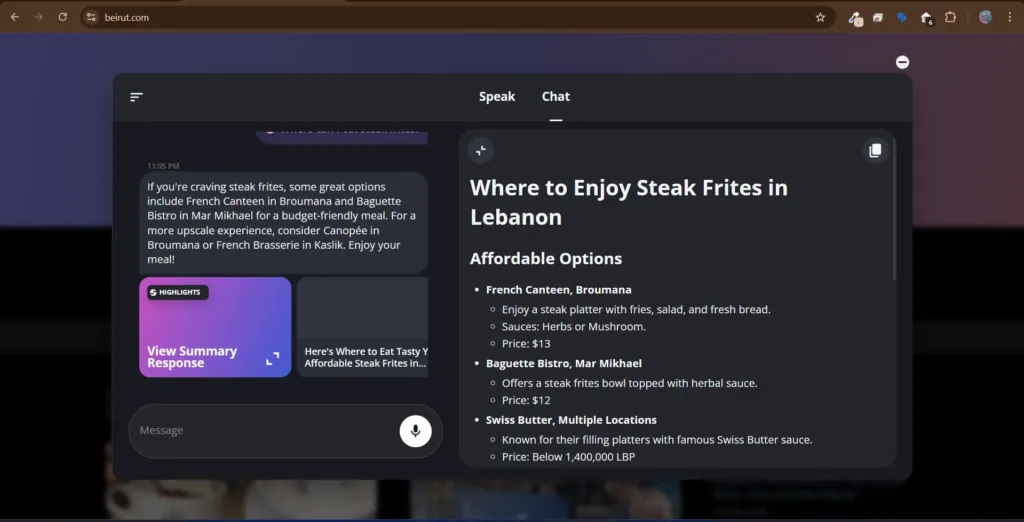
The AI parses the intent (quiet + business + location + utility) and serves the answer instantly.
The Feature Breakdown
They didn’t just slap a chatbot widget in the corner. It’s integrated into the core experience:
- Voice Native: You can talk to it. For a mobile-first country like Lebanon, tapping a mic is faster than typing.
- The “Lebanese” Factor: It handles the linguistic chaos of Lebanon perfectly. You can switch between English, Arabic, or that specific mix of the two we all use.
- Context Aware: If you’re logged in, it remembers. It’s building a “digital concierge” profile rather than just processing one-off queries.
Why This Matters
Vertical AI is the next big battleground. General models (like Gemini or GPT) are great at everything, but masters of nothing. Specialized platforms that sit on unique, high-quality proprietary data, like Beirut.com, have the upper hand if they play their cards right.
They aren’t trying to build a better Google. They are building a better way to access their own data.
The Verdict:
This is the quality-of-life upgrade local discovery needed. It proves that legacy media doesn’t have to be dinosaur media.
Go give it a shot. Ask it for “the best knafeh near me” and see if it beats your usual spot.