Trees Don’t “Sense” Solar Eclipses, New Study Finds
▼ Summary
– Scientists claimed spruce trees in Italy synchronized bioelectrical activity in anticipation of a solar eclipse, suggesting new insights into plant communication.
– This claim drew significant criticism from other researchers, with some questioning the validity of the published paper.
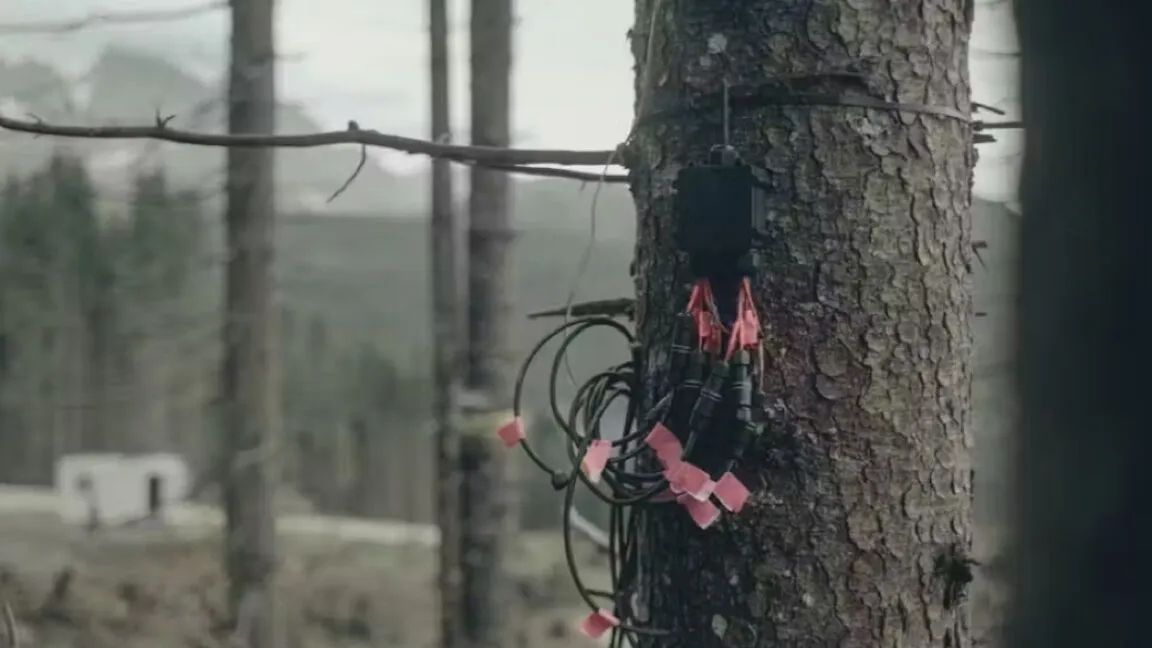
– Researchers attached electrodes to three spruce trees and five stumps, creating a system to record their bioelectrical activity.
– The sensors recorded a spike in activity that peaked during the eclipse, which the authors interpreted as a coordinated response to the darkening.
– The authors suggested older trees showed earlier, stronger responses, possibly indicating a form of memory or knowledge transmission to younger trees.
A recent study that suggested trees might anticipate solar eclipses has faced significant scientific scrutiny, with a new critique challenging its core conclusions. The original research, conducted in Italy’s Dolomite mountains, reported a synchronized spike in bioelectrical activity among spruce trees during a partial solar eclipse. This interpretation, which implied a form of plant communication or memory, has now been met with a detailed rebuttal from other experts in the field, published in the journal Trends in Plant Science.
The initial investigation involved a team led by physicist Alessandro Chiolerio and plant ecologist Monica Gagliano. They equipped three living spruce trees and five stumps in the Costa Bocche forest with electrodes, creating a system to monitor their electrical signals. The data showed a clear increase in this activity that peaked at the midpoint of the October 2022 eclipse before gradually subsiding. The researchers proposed this was a coordinated biological response to the sudden darkness, noting that older trees exhibited earlier and stronger signals. They further speculated this could indicate a learned response or “memory” within the trees, possibly even shared with younger specimens through detected bioelectrical waves.
However, the new critique systematically questions this interpretation. Critics argue the observed electrical patterns are far more likely a simple, passive physical reaction rather than an active biological sensing mechanism. A primary alternative explanation centers on the well-documented “telluric currents” that flow naturally through the Earth’s crust. These geoelectric currents are known to be influenced by changes in the Earth’s magnetic field, which are directly affected by the ionospheric disturbances a solar eclipse causes. The sensors attached to the trees, the critique suggests, may have merely recorded this background geophysical phenomenon, not a unique biological signal from the plants themselves.
The debate highlights the critical importance of ruling out all non-biological factors in such sensitive environmental measurements. Proponents of the original study would need to demonstrate that their equipment and methodology could definitively distinguish a tree’s internal electrical activity from the powerful and fluctuating currents in the surrounding soil and rock. Without this rigorous separation of signals, the extraordinary claim of trees “sensing” an eclipse remains scientifically unsupported. This exchange underscores the challenging but essential process of peer review in separating compelling narratives from robust, reproducible evidence in plant science.
(Source: Ars Technica)