Robotaxis Now Rival Rideshares on Price and Speed
▼ Summary
– San Francisco offers unique ride-hail options including Uber, Lyft, Waymo’s driverless service, and Tesla’s service, which currently uses human drivers in California.
– New data shows Waymo’s robotaxi service is becoming more competitive, with its prices and wait times narrowing the gap compared to Uber and Lyft in the Bay Area.
– Waymo’s pricing has improved significantly, now being 13% more expensive than Uber and 27% more than Lyft, and it is particularly competitive on longer trips and outside rush hours.
– Waymo’s wait times have also decreased and are now consistently shorter than Uber’s and closer to Lyft’s, except for a spike between 4 and 6 pm.
– Tesla’s ride-hail service in the Bay Area operates with a small fleet, uses its driver-assistance feature with a human driver, and does not currently offer autonomous rides.
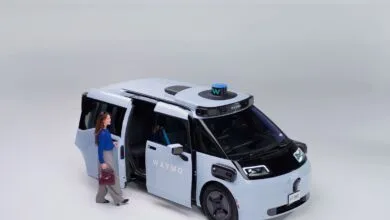
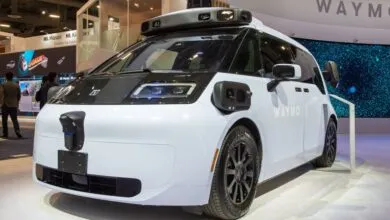
In San Francisco, commuters and visitors now have a genuine choice when booking a ride, with driverless robotaxis becoming a practical alternative to traditional rideshares. New data reveals that services like Waymo are rapidly closing the gap on both cost and convenience, challenging the long-held dominance of Uber and Lyft in their own backyard. This shift suggests autonomous vehicle technology is maturing from a curious experiment into a viable, everyday transportation option.
For a while, taking a robotaxi felt more like a tech demo than a serious commute. While tourists lined up for a futuristic joyride, most locals stuck with human-driven cars for their reliability and lower fares. According to recent analysis from the ride-hail aggregator Obi, that dynamic is changing. The company’s latest findings show Waymo’s pricing and wait times are now far more competitive in the Bay Area than they were just months ago.
Obi’s previous analysis in the spring highlighted a significant price premium for Waymo, with rides costing 30 to 40 percent more than its rivals. Fast forward to late 2025, and that gap has narrowed considerably. Waymo trips are now only about 13 percent more expensive than Uber and 27 percent more than Lyft. The service proves especially cost-competitive outside of peak rush hours. Furthermore, the price difference shrinks even more on longer journeys, a timely development as Waymo recently expanded its service to include certain highway routes. For trips between 4.3 and 9.3 kilometers, the cost per kilometer is nearly identical across services.
Perhaps the most compelling improvement is in wait times. Earlier data consistently showed Waymo lagging behind in getting a car to the customer. Now, its estimated arrival times are generally shorter than Uber’s and very close to matching Lyft’s. Obi’s CEO, Ashwini Anburajan, notes that reducing wait times is critical. “Consumers don’t like to wait. It’s an on-demand service for a reason,” she says, adding that this progress “creates a more equal playing field between all three.” A notable exception remains the evening rush hour from 4 to 6 PM, where both wait times and prices for Waymo see a sharp increase.
Meanwhile, Tesla’s ride-hail service operates under a different model in the region. While the company promotes its Full Self-Driving technology, the California service currently relies on human drivers behind the wheel. With a fleet of under 200 vehicles covering a large area, it remains a much smaller player compared to the established rideshare giants and the expanding robotaxi networks.
(Source: Wired)