MIO: Memories in Orbit Review – A Must-Play Metroidvania
▼ Summary
– MIO: Memories in Orbit is a stylish and enjoyable Metroidvania that is accessible and friendly, making it great for newcomers and genre fans despite a slow start.
– The game excels in exploration and platforming, offering a beautiful, varied world to discover and a satisfying flow state when combining traversal abilities, especially in later areas.
– Combat is identified as the game’s weaker aspect, being competent but repetitive, relying on a simple three-attack combo with limited meaningful customization.
– The game features a compelling atmosphere supported by a vibrant hand-drawn art style, charming robot characters, and a diverse, highly praised soundtrack.
– While not as brutally challenging as some genre titles, MIO offers substantial content with a main story of about a dozen hours and significant optional content for completionists.
MIO: Memories in Orbit delivers a stylish and thoughtful Metroidvania adventure that, while not reaching the pinnacle of the genre, provides a deeply enjoyable experience perfect for both newcomers and seasoned fans. It understands the core appeal of exploration and ability-gated progression, wrapping it in a beautiful, hand-drawn world. The opening hours may feel a bit relaxed for veterans, but the game confidently finds its challenging stride, offering a journey that is as charming as it is intriguing.
Following the intense challenge of games like Hollow Knight: Silksong, this title offers a welcome change of pace. You control Mio, an agile robot tasked with saving The Vessel, a decaying AI spaceship that serves as a home for a community of quirky robots. The core mission is a classic one: retrieve five key items scattered across the facility to reboot the failing system. The environment speaks the familiar language of the genre, clearly signaling future upgrades and locked pathways, making its world instantly readable to experienced players.
Initially, the gentle difficulty curve and straightforward combat might seem too simple. The combat system, while competent, lacks a certain spark, relying on a basic three-hit combo that can become repetitive. Modifiers purchased with in-game currency allow for some customization, but they offer minor tweaks rather than transformative changes to your offensive approach. However, the game’s strengths lie elsewhere and are compelling enough to overshadow this shortcoming.
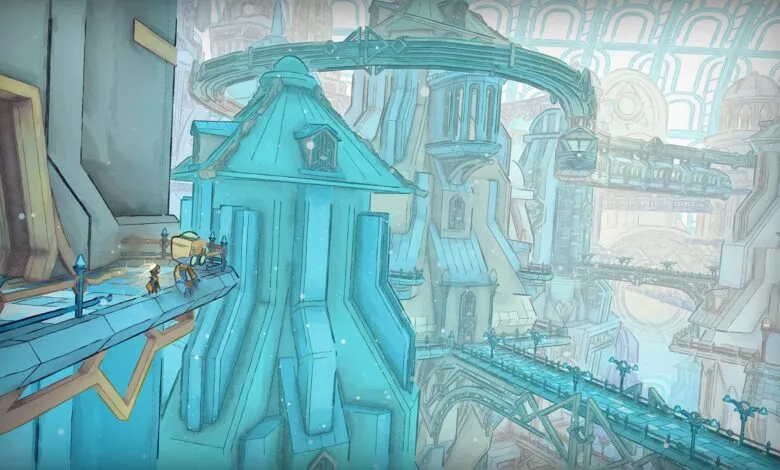
Where MIO truly excels is in its world design, atmospheric presentation, and later-game platforming. The Vessel is a fascinating place to explore, boasting impressive variety from gilded cityscapes to overgrown gardens. The graphic novel-inspired art is vibrant and full of personality, complemented by an outstanding, diverse soundtrack that perfectly sets the tone for each area. The experience shifts notably when you reach the Vaults in the ship’s depths. Here, the platforming challenge escalates significantly, requiring mastery of all your unlocked movement abilities. Stringing together dashes, glides, and grapples to navigate perilous obstacles evokes the fluid, joyful flow state of classics like Ori and the Blind Forest.
This is where the game comes into its own, rewarding skillful navigation with immense satisfaction and cleverly unlocked shortcuts. The exploration is further bolstered by a layered story that reveals its secrets to curious players, encouraging thorough investigation beyond the initial credits roll.
For those seeking a brutal, unrelenting challenge akin to Silksong, this might not be the title for you. MIO is designed to be more accessible and pensive, though it certainly presents demanding platforming sections and tough optional bosses. It also follows the genre’s tradition of a hands-off approach, guiding you with subtle nudges rather than explicit objective markers. Accessibility options include assists that gradually reduce boss health after repeated failures, a pacifist mode for non-boss enemies, and a health regeneration aid, alongside fully remappable controls.
Ultimately, developer Douze Dixièmes has crafted a Metroidvania with clear reverence for the genre. It may not revolutionize combat, but its captivating world, superb audio-visual design, and excellent late-game exploration create a memorable adventure. Fans of atmospheric exploration and fluid platforming will find a lot to love, making it an easy recommendation for anyone’s playlist.
(Source: TechRadar)