Fear, Blogging, and Laptop Testing in Las Vegas
▼ Summary
– The reviewer used a pre-production Asus Zenbook A16 with a Snapdragon X2 Elite chip as their primary laptop during CES and was generally impressed despite expected bugs.
– The laptop handled a demanding multitasking workload well and performed capably for photo editing in Lightroom, feeling comparable to Apple’s M-series chips in speed at times.
– A key advantage noted was that, like Apple’s chips, it delivered consistent performance whether running on battery or wall power, unlike many Intel/AMD Windows laptops.
– The Snapdragon X2 chip’s main shortcomings are expected to be in gaming compatibility and performance, with many games incompatible or running poorly.
– The Zenbook A16 shows significant promise for a thin, light Windows laptop, though its estimated price places it in direct competition with higher-end MacBook models.
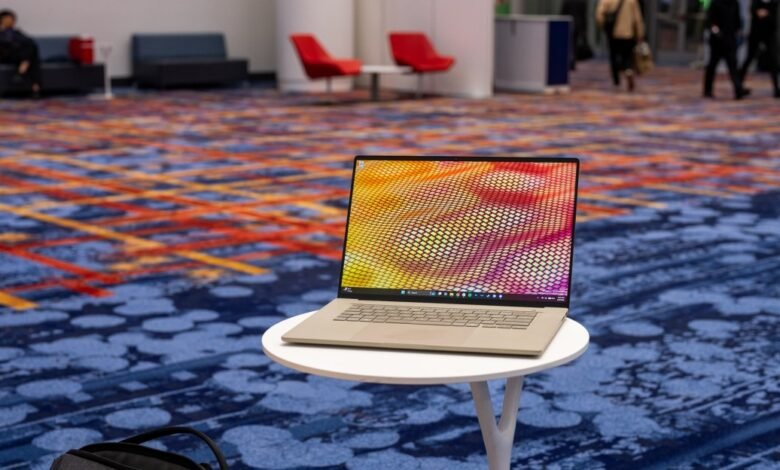
Putting an unreleased laptop through its paces at one of the world’s most demanding tech events is a risky move, but it can reveal a device’s true potential. That’s exactly what happened with the pre-production Asus Zenbook A16, an Arm-based laptop powered by Qualcomm’s upcoming flagship Snapdragon X2 Elite Extreme processor. Brought to CES as a primary work machine, this lightweight 16-inch device managed to handle a professional workload of writing, communication, and even demanding photo editing, offering a glimpse into a more MacBook-like future for Windows laptops.
The specific model provided for testing was loaded with high-end specs, including a staggering 48GB of RAM and a 2TB SSD, paired with a sharp 120Hz OLED display. While the final price is still tentative, early estimates suggest it will compete directly with higher-spec Apple MacBook Air and Pro models. The most immediate takeaway is its physical design: it delivers a large screen in a chassis that feels surprisingly light and portable.
Naturally, using pre-production hardware came with expected bugs. The facial recognition login feature failed entirely, and the laptop would occasionally enter sleep mode unexpectedly during use. These issues occurred while running an early Canary build of Windows, so they will likely be resolved by the time final units ship to consumers. Despite these glitches, the core performance was remarkably solid. For standard tasks—like managing dozens of browser tabs across multiple desktops while writing and communicating—the Zenbook A16 felt snappy and responsive from the outset.
The real challenge began at CES, where the laptop was tasked with editing high-resolution 50-megapixel RAW photos in Adobe Lightroom Classic. Initially, the experience was impressively smooth, rivaling the speed found on Apple’s latest silicon. Importing photos via the built-in full-size SD card reader was quick, and basic adjustments were handled with ease. The performance remained consistent whether the laptop was plugged in or running on battery, a key advantage shared with Apple’s M-series chips that is not always present in Intel or AMD-based Windows machines.
However, the workload intensified over the following days. Editing hundreds of photos from the show floor, especially when using more advanced tools like Lightroom’s masking feature, caused some slowdowns. The software would occasionally lag between adjustments. This is a common occurrence in Lightroom under heavy, sustained use, even on Macs, and was mitigated by periodically restarting the application. Once that was done, the Zenbook returned to feeling nimble, capable of swiftly flipping through high-resolution images for colleagues.
For intensive, professional photo editing, a high-end MacBook Pro would still be the preferred choice. Yet, the Zenbook A16 demonstrated that the gap is narrowing. The Snapdragon X2 chip enabled a level of efficient, battery-friendly performance that feels closer to a Mac than most traditional Windows laptops. This architecture does have its limits, particularly in gaming, where compatibility and graphical performance for demanding titles remain significant hurdles.
This early test suggests the Asus Zenbook A16 represents a promising step forward for thin-and-light Windows laptops. It combines a compelling design with performance that can handle serious creative work on the go. If the final production version irons out the pre-release bugs, it could become a strong contender for professionals seeking a Windows alternative that doesn’t compromise on power or portability.
(Source: The Verge)