Top Tech Innovations Unveiled at CES 2026
▼ Summary
– The author returned from CES 2026, a show dominated by AI announcements but which still yielded notable gaming hardware picks.
– The MSI MPG 341CQR QD-OLED X36 was the best gaming monitor, praised for its new Samsung QD-OLED panel that fixes text clarity issues.
– The Asus ROG G1000 won best gaming PC for its massive size and innovative holographic fan displays.
– The MSI GeForce RTX 5090 32G Lightning Z was the best graphics card, noted for its extreme water-cooled design and high power limit.
– Other key awards included the Asus ROG Zephyrus Duo laptop, Intel’s Panther Lake processors, the Lenovo Legion Go 2 handheld, and Nvidia’s G-Sync Pulsar monitor technology.
Returning home from CES 2026, the standout innovations weren’t the pervasive AI announcements but the genuinely exciting hardware designed for gamers. While the show floor buzzed with algorithmic promises, we focused on tangible gear that pushes the boundaries of play, from revolutionary monitors to jaw-dropping PCs. This year’s selections prove that meaningful advancements in performance and immersion are still driving the industry forward.
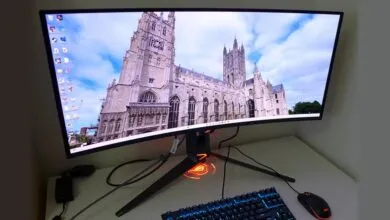
Our top pick for the best gaming monitor is the MSI MPG 341CQR QD-OLED X36. It utilizes a new generation of Samsung’s QD-OLED panel with a vertical RGB stripe layout. This technical shift addresses a long-standing weakness of OLED displays by dramatically improving text clarity and font rendering, resulting in stunning image quality. While cost and burn-in concerns remain for some, this panel represents a significant leap, earning a stellar review score from our experts for its exceptional performance.
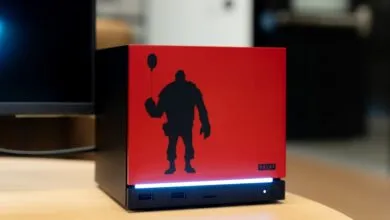
The best gaming PC award goes to the Asus ROG G1000, a machine that makes a statement through sheer scale and spectacle. Its colossal size is matched by an innovative visual feature: integrated holographic fan displays. Using Asus’s AniMe Holo technology, the system projects moving holographic imagery onto the side window and front panel. It’s an audacious return to the kind of extravagant, show-stopping PC reveals that once defined CES, making it impossible to ignore.
For the best graphics card, we chose the MSI GeForce RTX 5090 32G Lightning Z. This is not a subtle component. MSI has engineered an extreme, water-cooled variant of Nvidia’s flagship GPU, outfitting it with dual power connectors, a massive power limit, and its own integrated display. It embodies excessive performance, complete with a dedicated mobile app for tuning and features aimed at hardcore overclockers, making it the most visually and technically outrageous card on display.
The best gaming laptop is the Asus ROG Zephyrus Duo, a hybrid device that might finally make dual-screen laptops compelling. It combines a wireless magnetic keyboard with two screens, creating a versatile format for both work and play. It can be configured with top-tier components, including the latest Intel processors and a mobile RTX 5090. While its weight is notable, the potential for enhanced multitasking and unique gaming setups gives it serious appeal for power users.
Intel takes the prize for best processor with its new Core Ultra Series 3, codenamed Panther Lake. Built on the advanced 18A process, these mobile chips are particularly exciting for their integrated graphics. The new Intel Arc B390 iGPU, with dedicated ray tracing hardware, promises a future where thin laptops can deliver respectable gaming performance without a discrete GPU. This advancement also bodes extremely well for the next generation of gaming handhelds.
In the handheld category, the best device is the Lenovo Legion Go 2 SteamOS Edition. It builds on the solid foundation of its predecessor by upgrading to the more powerful AMD Ryzen Z2 Extreme APU, offering a notable boost in graphics performance. It retains the popular removable controllers and features a vibrant, high-refresh-rate display. While its premium price point is a consideration, Lenovo has refined a winning formula, making this a highly anticipated update.
Our pick for best innovation is Lego Smart Play. This isn’t traditional PC gear, but it’s a fascinating crossover. Lego has embedded a smart brick with sensors, a speaker, and a custom chip, allowing creations to interact with sound, light, and motion. Developed with input from gaming and engineering experts, it opens a new world of interactive, digital-physical play that sparks the imagination of builders young and old.
The best upgrade award recognizes the underlying technology powering several great displays: Samsung’s V-Stripe OLED panel. This new pixel arrangement, combined with a quantum dot layer and blue backlight, effectively solves the text fringing issue that has long plagued OLED monitors. While pixel density can still be a factor, this innovation delivers the incredible contrast and color of QD-OLED with much sharper text, marking a major step forward for desktop displays.
Finally, the best gaming tech overall is Nvidia G-Sync Pulsar. This new technology synchronizes a monitor’s backlight strobe with its refresh rate on a per-region basis. The effect on motion clarity is transformative, making fast-moving objects appear incredibly sharp and reducing perceived blur in a way that must be seen to be believed. It’s a profound hardware-level improvement that enhances gameplay across all genres, showcasing meaningful engineering focused purely on better visual performance.
(Source: PC Gamer)