NASA Demolishes Historic Saturn V, Shuttle Test Towers
▼ Summary
– Two historic NASA test facilities, the Propulsion and Structural Test Facility (1957) and the Dynamic Test Facility (1964), were demolished by controlled implosion.
– The facilities were demolished because they were no longer in use and required $25 million in repairs, which NASA cited as a responsible use of taxpayer funds.
– The Propulsion and Structural Test Facility was crucial for developing the Saturn V rocket’s F-1 engine and first stage, which launched astronauts to the moon.
– This facility also tested earlier rockets like the Redstone and Saturn IB, and later the space shuttle’s solid rocket motor.
– The Propulsion and Structural Test Facility was recognized as a National Historic Landmark, having been added to the National Register of Historic Places in 1984.
Two historic test towers that played a crucial role in America’s journey to the moon and the space shuttle era have been demolished at NASA’s Marshall Space Flight Center in Alabama. The controlled implosions mark the end of an era for facilities that were foundational to the Saturn V rocket and space shuttle program, structures that had become outdated and costly to maintain.
The implosions on Saturday brought down the Propulsion and Structural Test Facility and the Dynamic Test Facility. Erected in 1957 and 1964 respectively, these towers had been inactive for years. NASA cited a significant repair backlog of approximately $25 million as a key factor in the decision. The agency stated that removing this aging infrastructure is a necessary step toward modernization and more efficient operations at the Huntsville site.
NASA Administrator Jared Isaacman framed the demolition as responsible fiscal management. “This work reflects smart stewardship of taxpayer resources,” he said. “Clearing outdated infrastructure allows NASA to safely modernize, streamline operations and fully leverage recent infrastructure investments to keep Marshall positioned at the forefront of aerospace innovation.”
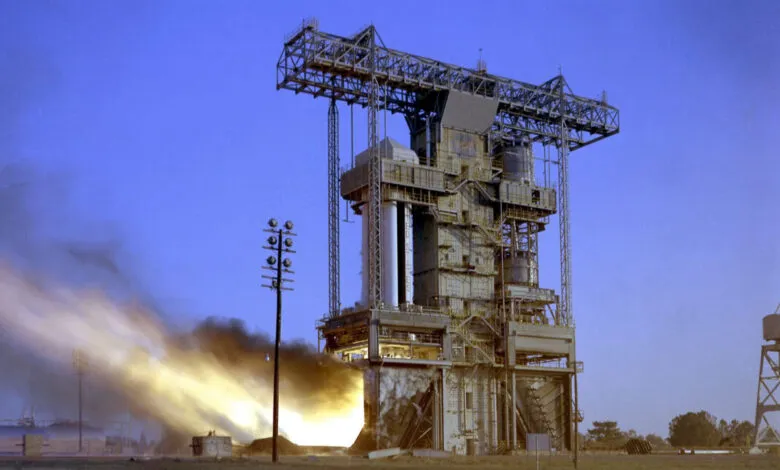
The larger of the two structures, the Propulsion and Structural Test Facility, stood 175 feet tall. Often called the “T-tower” due to its distinctive shape, it was a pioneering site for testing multi-engine rocket stages. Its most famous contributions came during the Apollo program, where it was instrumental in developing the mighty F-1 engines and the first stage of the Saturn V moon rocket.
Originally built by the Army Ballistic Missile Agency, the facility’s history spans decades of rocketry. It began with testing the Redstone rocket, supported the Saturn IB program, and was later modified to test the space shuttle’s solid rocket motors. In recognition of its historic significance, the site was added to the National Register of Historic Places in 1984 and designated a National Historic Landmark in 1985.
The demolition clears the way for future projects at Marshall, which remains a hub for NASA’s deep space exploration and propulsion development efforts. While the physical towers are gone, the engineering legacy and the monumental achievements they supported continue to inspire current and future generations of space exploration.
(Source: Ars Technica)