CES 2026: Humanoid Robots Head for Your Home
▼ Summary
– Humanoid robots for household chores were prominently featured at CES, with companies like LG, SwitchBot, and Boston Dynamics showcasing new models.
– A key challenge for these robots is mastering the complex, multi-step task of doing laundry, which involves sorting, loading, and folding clothes.
– Many companies at CES claimed their robots could handle laundry, but *The Verge* decided to test these claims on the show floor.
– The article questions whether the future lies in advanced humanoids or in smaller, single-purpose machines that were also widely present at the event.
– A video investigation explores expert opinions on whether humanoid robots are an inevitable trend or merely exaggerated “vaporware” at CES.
The dream of a humanoid robot handling our most tedious chores feels closer than ever, with this year’s CES showcasing a new wave of domestic assistants. Companies like LG, SwitchBot, and Boston Dynamics unveiled robots designed to integrate into our daily lives, promising to manage everything from meal prep to the most universally dreaded task: laundry. While robotic vacuums and lawnmowers have become commonplace, the complex, multi-step process of washing clothes remains the final frontier for home automation.
Nearly every robotics firm at the event claimed their creation could conquer this challenge, with demonstrations featuring machines loading washing machines and neatly folding garments. The critical question, however, is whether these impressive show floor demos translate to real-world capability or if they represent another round of speculative hype. To find out, we put these promises to the test, investigating whether the future belongs to versatile humanoids or the more numerous, single-purpose smart devices that filled the convention center.
Laundry presents a uniquely difficult problem for machines. It involves a series of distinct actions, collecting scattered clothes, sorting them by color and fabric, loading a washer, transferring items to a dryer, folding the cleaned laundry, and finally putting it away. This requires not just advanced mobility and dexterity, but also sophisticated computer vision and AI to understand and manipulate soft, unpredictable textiles. While a robot can be programmed to pick up a specific towel in a controlled environment, recognizing and handling a tangled heap of mixed garments in a messy bedroom is an entirely different challenge.
Our investigation took us directly to the booths of leading innovators. We spoke with the president of Roborock, a giant in dedicated home robotics, who emphasized the efficiency and reliability of devices built for a singular purpose. In contrast, the CEO of humanoid startup Zeroth argued that a general-purpose platform is the inevitable endpoint, a machine that can learn to operate any appliance and adapt to new tasks as needed. This fundamental debate lies at the heart of the current robotics surge.
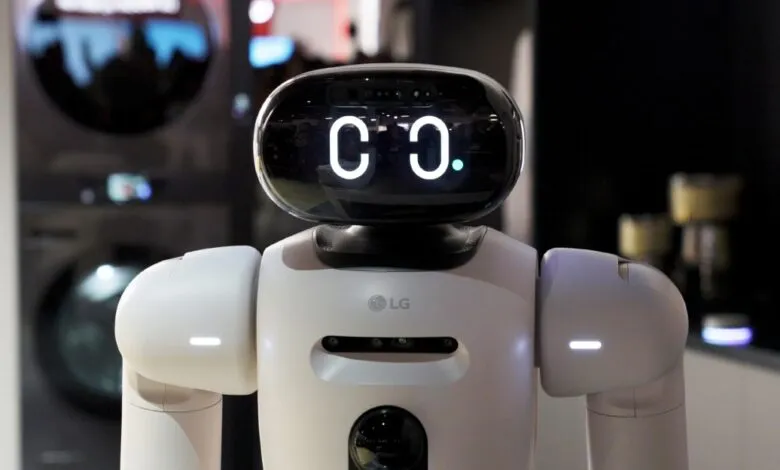
The demonstrations were compelling but often carefully orchestrated. Robots like LG’s CLOiD and SwitchBot’s Onero H1 performed specific actions smoothly, yet these were pre-programmed routines in ideal conditions. The gap between a staged demo and a machine that can navigate a cluttered home, find a laundry basket, and handle a red sock mixed in with the whites is still significant. The AI required to make those nuanced judgments in real time is extraordinarily complex and not yet fully realized in a consumer-ready package.
This leads to a practical consideration for consumers. Would you prefer a single, expensive humanoid that attempts to do everything but may struggle with reliability, or a suite of smaller, more affordable robots each dedicated to a specific job? The market already offers the latter, with automated mops, gutter cleaners, and pool skimmers. A specialized laundry-folding robot, while less glamorous than a walking, talking android, might solve a concrete problem much sooner.
The journey to a truly helpful domestic robot is ongoing. The advancements in sensors, actuators, and machine learning shown at CES are genuine and accelerating. However, the path to a robot that can reliably and safely take over a chore as nuanced as laundry is longer than a single trade show might suggest. The industry must bridge the gap between controlled demonstrations and the chaotic reality of everyday homes. The ultimate test won’t happen on a convention floor, but in living rooms and hallways around the world.
(Source: The Verge)