Is Grand Theft Auto 6 Too Realistic? The Debate on Video Game Violence

▼ Summary
– The 2026 video game release pipeline is expected to further blur the line between real-world and virtual aesthetics, with Grand Theft Auto 6 being the most hyped title.
– A gaming CEO predicted in 2020 that games would achieve completely realistic, live-action visuals within a decade, but this milestone appears to have been reached much faster.
– Recent games like *Death Stranding 2* and *Alan Wake 2* have already showcased boundary-breaking, hyper-realistic graphics that create immersive, film-like environments.
– There is a concern that hyper-realism in games could diminish escapism and instead create overly immersive, potentially disturbing “misery simulators.”
– *Grand Theft Auto 6* is touted as the largest game launch in history, featuring a massive budget and a stunningly accurate 4K virtual reproduction of Florida called Leonida.
The upcoming release of Grand Theft Auto 6 is poised to be a landmark moment for the video game industry, not only for its anticipated commercial success but for the profound questions it raises about the nature of immersive entertainment. As the most expensive and technically ambitious title in the franchise’s history, it promises an unprecedented level of visual fidelity. This leap forward, however, sparks a significant debate: when a game world mirrors our own with such startling clarity, does it enhance the experience or risk crossing a line from escapism into something more unsettling?
Industry leaders foresaw this moment. Back in 2020, Take-Two Interactive CEO Strauss Zelnick suggested that within a decade, games would achieve a live-action, photorealistic quality. That prediction appears to have arrived ahead of schedule. Recent titles have already demonstrated this breathtaking capability. The post-apocalyptic landscapes of Death Stranding 2 feature individually rendered blades of grass and light that behaves with real-world physics. Similarly, the atmospheric world of Alan Wake 2 was praised for its boundary-pushing visuals that felt less like a game and more like stepping into a meticulously crafted film set.
This relentless march toward hyper-realism forces us to confront a critical issue. The core appeal of gaming has often been its ability to transport players to another reality, offering a respite from daily life. Yet as graphical technology advances, the virtual world begins to lose its distinct, fantastical separation. The concern is whether this deep immersion, especially in narratives involving crime and violence, could transform an entertaining pastime into an experience that feels uncomfortably close to a simulation of real-world strife. Does extreme realism amplify the impact of content in ways that are psychologically complex?
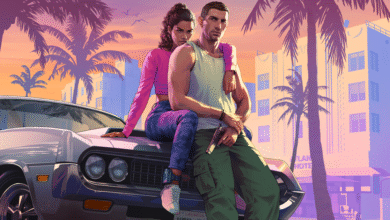
Scheduled for a late 2026 launch after several delays, Grand Theft Auto 6 stands at the forefront of this technological frontier. Rockstar Games, its developer, has billed it as the largest game launch ever, with a production budget rumored to exceed one billion dollars. Players will explore Leonida, a fictional U.S. state designed as a stunningly detailed facsimile of modern Florida. The promise is a living, breathing world rendered in meticulous 4K detail, where every environment, character, and interaction is crafted to feel authentic. This commitment to realism is what generates immense excitement, but it also fuels the ongoing discussion about the potential consequences of such a convincing virtual playground.
(Source: BBC)