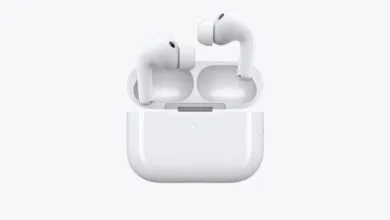
Experience the Future of Noise Canceling

▼ Summary
– The audio industry is increasingly focusing on integrating health features, particularly hearing protection, into devices.
– Apple is currently seen as a leader in this area of adaptive audio and hearing health technology.
– The startup Hearvana AI, backed by Amazon’s Alexa Fund, is developing advanced “semantic hearing” technology.
– Their technology uses AI to identify and allow users to selectively isolate or block specific ambient sounds, like voices or alarms.
– An early prototype demonstrated the ability to distinguish between sounds such as a vacuum cleaner and a door knock for personalized audio filtering.
The future of personal audio is moving beyond simple noise cancellation, evolving into a sophisticated tool for hearing health and environmental awareness. Industry leaders are now focusing on creating devices that intelligently adapt to our surroundings, protecting our ears while keeping us connected to what matters. This shift responds to growing concerns about hearing loss, particularly among younger demographics. Manufacturers are increasingly prioritizing technology that doesn’t just block sound, but smartly manages it. As one audio expert notes, the goal is for headphones to make contextual decisions on our behalf, automatically tuning out harmful or distracting noise during a loud event and seamlessly restoring normal audio levels once we’re in a calmer space. This proactive approach to auditory well-being represents a significant leap from traditional passive noise reduction.
A new generation of startups is pushing these boundaries even further. One company, backed by significant investment including from major tech funds, is pioneering what it calls “semantic hearing.” This technology began with a simple yet powerful premise: teaching headphones to understand the world around them. The founding team, which includes university researchers, developed an early prototype equipped with multiple microphones. They trained an AI model to recognize and classify dozens of distinct environmental sounds, from sirens and car horns to birdsong and a baby’s cry.
The real innovation lies in user control. Instead of a blanket “on” or “off” for noise cancellation, the system allows someone to selectively filter their acoustic environment. Imagine sitting on a crowded beach and choosing to hear only the waves while muting nearby conversations. Or, while vacuuming at home, you could set the headphones to let through the sound of a door knock or a child’s call. The technology learns to distinguish between similar-sounding events, understanding the critical difference between the rumble of an appliance and the pattern of someone at the door. This level of intelligent, context-aware audio processing promises a truly personalized soundscape, creating a protective “bubble” that adapts dynamically to both our needs for focus and our need to stay aware.
(Source: Wired)