NASA safety panel: Starliner incident deserved more serious response
▼ Summary
– For most of two months, the severity of the problems with Boeing’s Starliner spacecraft docked at the ISS was not widely known, even within NASA’s workforce.
– On its first crewed test flight in June 2024, Starliner delivered two astronauts to the station, but they were stranded there for nine months as NASA deemed a return trip too risky.
– The spacecraft experienced serious issues during its flight, including thruster malfunctions and helium leaks, which at one point caused a temporary loss of control during docking.
– A safety panel member stated the thruster failure was severe enough that it could have led to the loss of the vehicle and crew without recovery, making the decision to use the ISS as a safe haven prudent.
– Despite public assurances that Starliner could be used for an emergency evacuation, NASA officials conducted extensive testing and ultimately decided not to use it for the astronauts’ return trip.
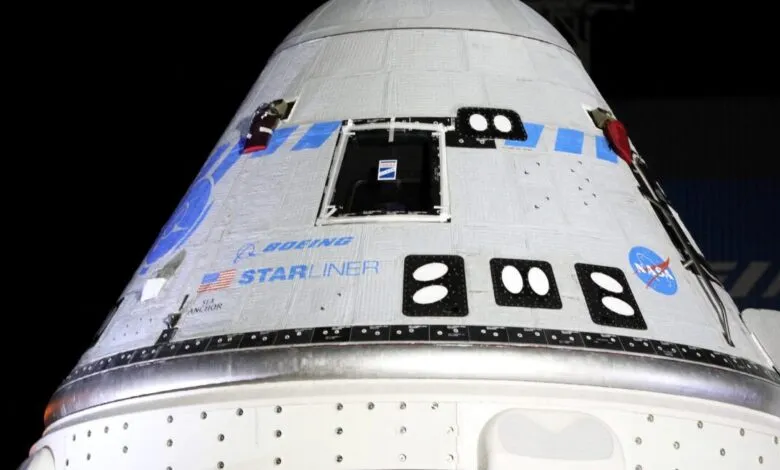
The extended stay of Boeing’s Starliner spacecraft at the International Space Station last year highlighted significant safety concerns that a NASA advisory panel believes warranted a more urgent and transparent response. The Aerospace Safety Advisory Panel (ASAP) concluded that the severity of the in-flight anomalies, which included thruster failures and helium leaks, was not adequately communicated within the agency or to the public. This lack of clarity created a period of confusion and uncertainty, even among NASA’s own workforce, regarding the true risk to the mission and its crew.
During its inaugural crewed flight in June 2024, the Starliner capsule successfully delivered astronauts Butch Wilmore and Suni Williams to the orbiting lab. However, the journey was far from smooth. Multiple maneuvering thrusters overheated and failed, and engineers discovered persistent helium leaks in the propulsion system. At one critical point, Commander Wilmore temporarily lost the ability to control the spacecraft’s orientation as it approached the station for docking. Ground teams managed to recover most thruster functionality, allowing for a successful link-up, but the problems were severe.
Charlie Precourt, a former shuttle commander and ASAP member, underscored the gravity of the situation. He noted that without recovering control, neither docking nor a safe return to Earth would have been possible, a scenario that could have resulted in the loss of the vehicle and its crew. Given these risks, NASA’s decision to use the space station as a safe haven for extended engineering analysis was prudent. The astronauts, initially scheduled for a brief stay, remained aboard the ISS for nearly nine months while teams on the ground worked to understand the root causes.
Throughout the summer, NASA and Boeing officials publicly maintained that Starliner was prepared to return the astronauts in an emergency. Behind the scenes, however, a different reality was unfolding. Extensive testing and analysis were ordered, and there was a genuine, though underreported, possibility that managers would decide against using Starliner for the crew’s return. This internal deliberation culminated in the eventual choice to bring Wilmore and Williams home last March aboard a SpaceX Dragon spacecraft, a clear indication of the lingering doubts about Starliner’s reliability.
The panel’s findings suggest a disconnect between the known technical challenges and the organizational response. The critical anomalies experienced during the flight demanded a more serious and immediate emphasis on risk communication. The episode serves as a stark reminder that in human spaceflight, transparency about technical difficulties is not just a matter of public relations but a fundamental component of mission safety and organizational accountability.
(Source: Ars Technica)